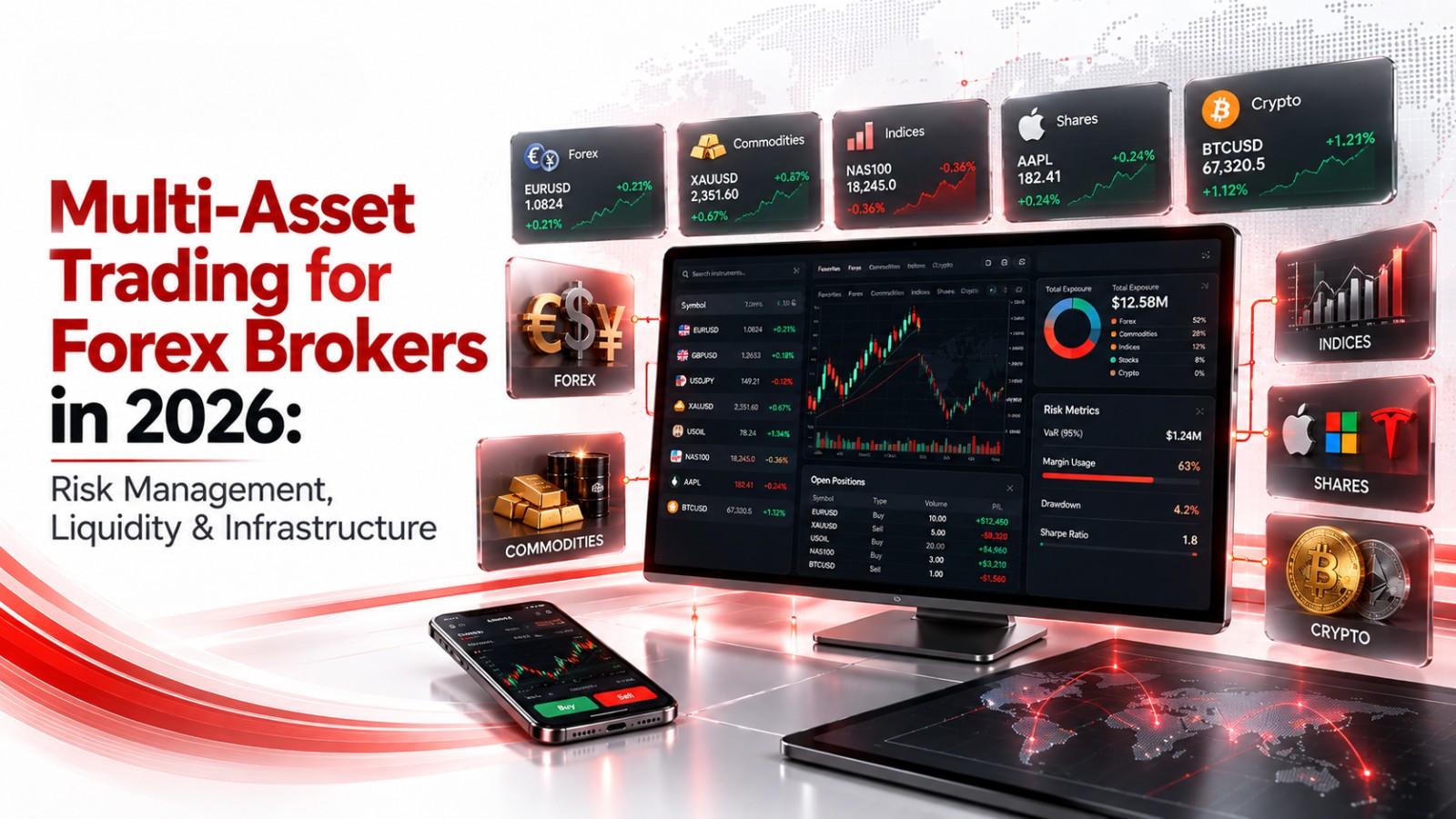
The forex brokerage industry is evolving beyond traditional currency trading. In 2026, brokers are increasingly expanding into indices, commodities, metals, equities, and other asset classes to meet changing trader expectations and diversify revenue opportunities. However, moving from a forex-only model to multi-asset trading requires more than adding new instruments to a trading platform.
A successful multi-asset brokerage needs connected infrastructure across trading platforms, liquidity providers, execution systems, risk management, and back-office operations. As the number of instruments and client positions increases, brokers also need stronger real-time visibility into exposure, liquidity, margin, and trading behavior.
For brokers planning this expansion, the combination of technology, liquidity management, and automated risk controls is becoming a core part of sustainable brokerage infrastructure.
What Is Multi-Asset Trading for Forex Brokers?
Multi-asset trading allows clients to access several financial markets through a single brokerage ecosystem. Instead of offering only currency pairs, brokers can provide instruments such as forex, indices, commodities, metals, equities, and selected digital assets, depending on their regulatory permissions and business model.
This model can improve the client experience by giving traders access to multiple markets from one account and platform. It can also increase trading opportunities and help brokers serve different trading strategies and client segments.
However, every additional asset class introduces different pricing, liquidity, margin, volatility, and exposure characteristics. A broker therefore needs an infrastructure capable of managing these differences without creating fragmented risk controls.
Why Risk Management Becomes More Complex
Risk management becomes significantly more important when a broker supports multiple asset classes. A client may simultaneously hold EUR/USD, gold, an equity index, and an oil position. These instruments can react differently to economic announcements, interest rates, geopolitical developments, market sentiment, and liquidity conditions.
For the brokerage, this creates several layers of risk, including:
Net exposure across instruments and asset classes
Concentrated client positions
Margin and collateral requirements
Liquidity-provider exposure
Market volatility and price gaps
Hedging costs
Execution and slippage risk
Counterparty and operational risk
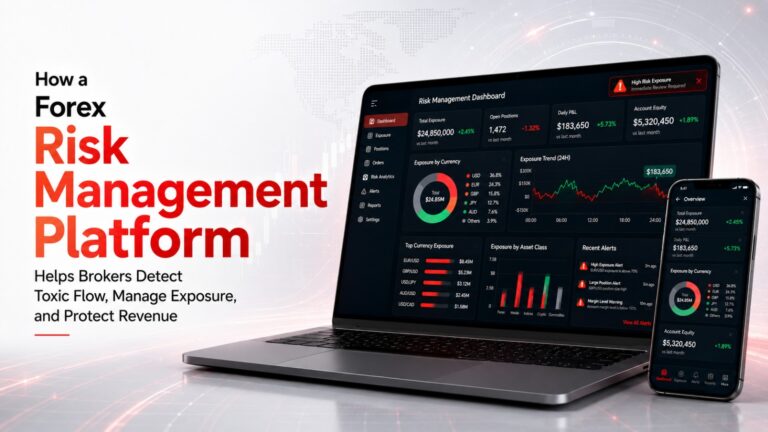
This is why modern Forex Broker Risk Management Solutions should provide a consolidated view of exposure instead of treating each trading environment independently.
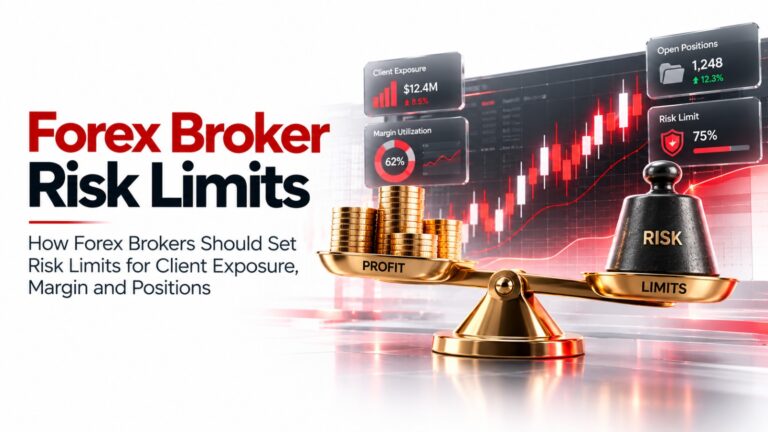
Automated controls can help brokers establish exposure limits, monitor margin utilization, identify unusual trading patterns, and trigger predefined risk actions. The FCA has also highlighted the importance of effective liquidity risk management for wholesale trading firms, including brokers and CFD businesses.
The Role of MT4 and MT5 in Multi-Asset Brokerage Infrastructure
MetaTrader remains an important component of many brokerage environments, but brokers operating multiple asset classes need to consider how their platform infrastructure handles different instruments.
MT4 MT5 Risk Management Software can connect with MetaTrader server environments to consolidate information such as open positions, pending orders, equity, margin, and exposure. A unified risk layer can help brokers monitor activity across multiple accounts, groups, symbols, and servers.
MT5 is particularly relevant for multi-asset strategies because its architecture supports a broader range of financial instruments than traditional forex-only environments. Brokers operating both MT4 and MT5 may therefore require centralized monitoring and risk controls across both systems.
The objective is not simply to monitor trades. Effective risk technology should turn trading data into actionable information, allowing risk teams to identify exposure concentrations, establish limits, manage hedging decisions, and respond quickly when market conditions change.
Liquidity: The Foundation of Multi-Asset Trading
Liquidity is one of the biggest infrastructure considerations when expanding into multiple asset classes.
Forex liquidity is generally deep across major currency pairs, but liquidity characteristics can differ substantially for commodities, indices, metals, equities, and other instruments. Market depth can change according to trading hours, economic events, volatility, and the availability of counterparties.
A multi-asset broker therefore needs reliable relationships with liquidity providers and an execution infrastructure capable of handling different market conditions.
Liquidity management should include:
Multiple liquidity-provider connections where appropriate
Smart order routing
Price aggregation
Instrument-specific liquidity monitoring
Slippage analysis
Execution-quality monitoring
Exposure-aware hedging
Contingency planning during liquidity disruptions
Liquidity providers can also behave differently during extreme market conditions. FCA research has highlighted that liquidity provision in FX can change materially during periods of market stress, making liquidity resilience an important consideration for brokers.
Real-Time Risk Analytics for Forex Brokers
Traditional end-of-day reporting is increasingly insufficient for multi-asset environments. Risk teams need to understand what is happening across the brokerage while positions are changing.
Real-Time Risk Analytics for Forex Brokers provides this visibility by continuously analyzing trading activity and exposure.
A real-time analytics layer can help monitor:
Gross and net exposure
Client-level and group-level positions
Margin utilization
Profit and loss
Exposure by instrument
Exposure by asset class
A-Book and B-Book allocation
Hedging requirements
Trading concentration
Liquidity and execution indicators
The advantage is speed. If exposure becomes concentrated in a particular instrument, the risk team can identify the situation before it becomes a larger operational or financial problem.
This approach also supports better decision-making during volatile markets, when positions, prices, and margin requirements can change rapidly.
Infrastructure Requirements for Multi-Asset Brokers
Expanding into multi-asset trading requires a technology stack that connects different parts of the brokerage rather than operating them as isolated systems.
A modern architecture may include trading platforms, liquidity bridges, price aggregation, CRM, client portals, risk management, reporting, compliance tools, and back-office systems.
Data should move efficiently between these components so that trade information, client information, pricing, exposure, and account status remain synchronized.
Scalability is equally important. Infrastructure designed for a small forex operation may struggle when trading volume, instruments, clients, and liquidity connections increase. Brokers should therefore consider server capacity, redundancy, API connectivity, monitoring, cybersecurity, disaster recovery, and system availability when planning expansion.
How Forex Brokerage Solutions Support Multi-Asset Growth
A multi-asset strategy works best when technology is designed around the entire brokerage operation rather than individual components.
Modern Forex Brokerage Solutions can bring together trading infrastructure, liquidity connectivity, risk management, execution technology, and operational systems. This integrated approach can reduce technology fragmentation and give brokers greater control over their trading environment.
The goal is to create an infrastructure where adding a new asset class does not require rebuilding the entire technology stack.
At the same time, regulatory obligations remain critical. For example, UK-regulated firms offering CFDs and rolling spot forex must comply with specific requirements around leverage, margin close-out, client protection, and risk warnings.
Key Considerations Before Expanding
Before introducing additional asset classes, brokers should evaluate five areas:
- 1. Risk architecture: Can the existing system monitor cross-asset exposure in real time?
- 2. Liquidity: Are there sufficient liquidity sources and appropriate execution arrangements for each instrument?
- 3. Technology: Can the platform, bridge, CRM, and back office scale with additional trading activity?
- 4. Compliance: Are the proposed instruments permitted within the broker’s regulatory framework and target markets?
- 5. Analytics: Can the risk team identify concentration, margin pressure, and abnormal trading activity quickly?
These questions help brokers determine whether their existing infrastructure can support multi-asset expansion or whether additional technology is required.
Conclusion
Multi-asset trading represents a significant infrastructure opportunity for forex brokers in 2026, but expansion should be supported by scalable technology rather than simply adding more instruments.
Strong liquidity connectivity, centralized risk controls, MT4/MT5 integration, and real-time analytics can help brokers manage increasingly complex trading environments. With the right infrastructure, brokers can build a more connected trading operation capable of supporting new markets while maintaining visibility and control over risk.
Frequently Asked Questions
Q1. What is multi-asset trading for forex brokers?
Multi-asset trading allows a forex broker to offer clients access to multiple asset classes, such as forex, indices, commodities, metals, and equities, through an integrated trading environment.
Q2. Why is risk management important for multi-asset brokers?
Different asset classes have different volatility, liquidity, margin, and exposure characteristics. Centralized risk management helps brokers monitor these risks and respond to changing exposure more quickly.
Q3. What is MT4 MT5 Risk Management Software?
It is technology designed to monitor and manage trading exposure across MT4 and MT5 environments, including positions, margin, equity, exposure, hedging, and risk limits.
Q4. How Many Instruments Should a Multi-Asset Broker Offer?
A competitive multi-asset broker may offer hundreds or even thousands of instruments across forex, indices, commodities, metals, equities, and other markets. However, the right number depends on client demand, liquidity, platform capabilities, and the broker’s ability to manage exposure and risk effectively.
Q5. What infrastructure does a multi-asset broker need?
A multi-asset brokerage typically needs scalable trading platforms, liquidity connectivity, execution and bridge technology, centralized risk management, analytics, CRM, reporting, cybersecurity, and reliable back-office infrastructure.