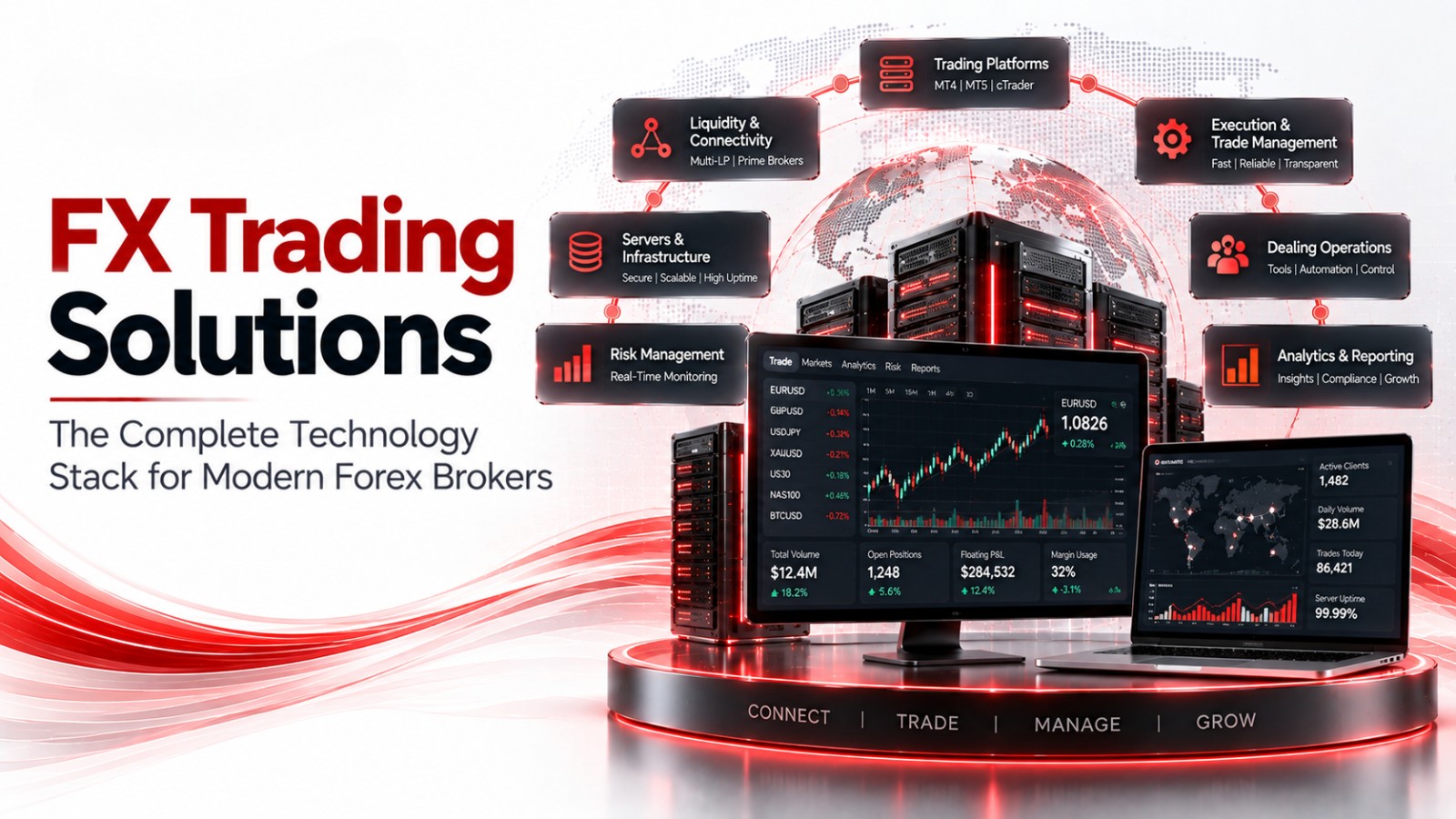
Modern forex brokers rely on far more than a trading platform to operate efficiently. Behind every client order is a connected technology environment involving trading servers, liquidity providers, bridges, execution systems, risk controls, dealing operations, and monitoring tools. When these components work independently, brokers can face fragmented data, operational delays, connectivity issues, and limited visibility across the trading lifecycle.
FX trading solutions bring these functions together into an integrated infrastructure designed around the requirements of a modern brokerage. Faster connectivity, access to multiple liquidity providers, scalable server environments, reliable execution, and increasing regulatory and operational requirements are changing how brokers build their technology stacks. Instead of treating each component as a separate system, brokers increasingly need an interconnected environment that can support trading activity from platform access through execution, monitoring, and reporting.
What Are FX Trading Solutions?
FX trading solutions refer to the technology, infrastructure, connectivity, and operational systems that enable a forex brokerage to provide and manage trading services. The ecosystem can include trading platform infrastructure, MT4 and MT5 environments, server configuration, liquidity-provider connectivity, bridges, order execution, risk and exposure monitoring, dealing-desk operations, and reporting.
The objective is not simply to provide traders with access to a platform. The technology must also allow the brokerage to process orders, receive pricing, connect with liquidity sources, monitor trading activity, and maintain operational visibility.
As part of the wider forex brokerage solutions ecosystem, FX trading technology forms the infrastructure connecting the front-end trading experience with the systems operating behind the scenes.
Why Forex Brokers Need an Integrated Trading Technology Stack
A forex brokerage depends on continuous communication between multiple systems. A trader places an order through the trading platform, the broker’s infrastructure processes the request, and the order may then pass through a bridge or API connection to one or more liquidity providers.
Every stage depends on reliable connectivity and compatible infrastructure. Real-time pricing needs to reach the platform consistently, orders need to be processed without unnecessary delays, and server environments need to remain available as trading activity changes.
Integration also becomes increasingly important as volumes grow. More clients, instruments, liquidity relationships, and trading activity can place additional demands on infrastructure. A connected technology stack gives brokers greater operational visibility while allowing individual components to be upgraded or expanded without disrupting the entire environment.
Core Components of an FX Trading Solution
Trading Platform & Server Infrastructure
MT4 and MT5 remain important components of many forex brokerage environments. However, operating a platform involves more than simply installing the software. Brokers need appropriately configured servers, reliable connectivity, monitoring, and infrastructure capable of supporting their expected trading activity.
Server configuration can influence platform availability, communication with connected systems, and the processing of trading activity. Ongoing monitoring is also important for identifying infrastructure issues before they affect operations.
For brokers expanding their client base or running multiple trading environments, scalable MT4 & MT5 server setup & management becomes an important part of the overall technology architecture.
Liquidity & Market Connectivity
Liquidity connectivity connects a broker’s trading environment with external liquidity sources. Instead of depending entirely on a single provider, brokers can establish connections with multiple liquidity providers and manage different pricing and execution relationships.
Liquidity aggregation can combine pricing streams from multiple sources, while bridges and APIs provide the technical connection between the broker’s platform and external liquidity infrastructure.
This architecture gives brokers greater flexibility when managing liquidity relationships. It can also support the introduction of additional providers as the brokerage expands, without requiring the entire trading environment to be rebuilt.
Order Execution & Trade Flow
Order execution technology manages how trading requests move from the client platform through the broker’s infrastructure and toward the appropriate execution destination.
The workflow can involve the trading platform, server environment, bridge, liquidity aggregator, and liquidity provider. Each component needs to communicate reliably to maintain a consistent trade flow.
Latency, routing logic, connectivity, and transaction visibility all matter within this process. Brokers therefore need infrastructure that allows them to understand where orders are moving, how different systems interact, and whether execution workflows are operating as expected.
Risk & Exposure Monitoring
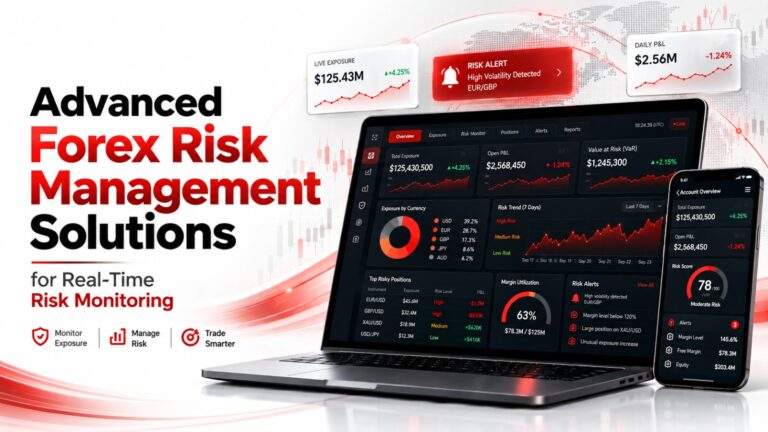
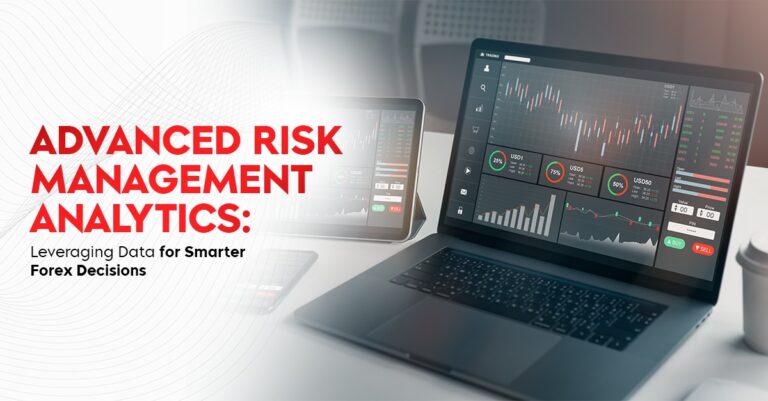
Risk and exposure monitoring provides brokers with visibility into trading activity after orders enter the system. At a high level, this can include open positions, exposure, margin, P&L, trading flow, and broker-level controls.
The monitoring layer connects trading activity with operational decision-making, allowing dealing teams and risk personnel to observe changes across the brokerage environment.
For brokers looking for dedicated technology in this area, Forex Broker Risk Management Solutions can form a separate layer within the wider FX trading infrastructure rather than replacing the platform, liquidity, or execution systems.
How FX Trading Solutions Support Forex Broker Operations
A typical technology workflow can be viewed as:
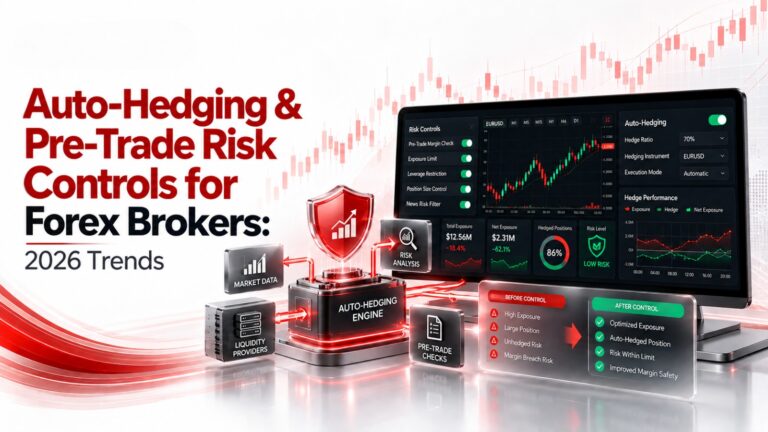
Trader → MT4/MT5 → Broker Infrastructure → Bridge/API → Liquidity Provider → Execution → Risk Monitoring → Reporting
Each stage performs a different function, but the value comes from how these systems communicate with one another.
The platform provides the trading interface. Broker infrastructure processes the trading activity. Bridges and APIs connect the environment to external liquidity sources. Execution systems handle order flow, while monitoring systems provide visibility into positions and operational activity. Reporting then helps teams review trading and operational information.
An integrated architecture can help brokers manage trading activity, maintain platform availability, monitor execution, manage liquidity connections, observe exposure, support dealing operations, and maintain a clearer view of the overall trading environment.
Key Factors to Consider When Choosing FX Trading Solutions
When evaluating an FX trading technology stack, brokers should consider several practical factors:
- Scalability: Infrastructure should support increasing trading volumes, clients, and instruments.
- Connectivity: The environment should integrate with trading platforms, bridges, APIs, and liquidity providers.
- Reliability: Stable infrastructure and monitoring can help minimise interruptions to trading operations.
- Execution: Order routing and processing should support consistent and transparent trade flows.
- Monitoring: Teams need operational visibility across platforms, connectivity, and trading activity.
- Integration: New technology should work with the broker’s existing systems rather than creating another isolated environment.
- Support: Technical and dealing-room assistance can help brokers manage infrastructure and operational requirements as they evolve.
Market Developments Shaping FX Trading Infrastructure
FX trading infrastructure continues to evolve as brokers look for more flexible and scalable technology. Multi-LP connectivity is increasingly relevant for firms seeking broader access to liquidity sources, while API-driven infrastructure enables systems to communicate more efficiently across different technology environments.
Some brokers are also expanding beyond traditional forex products into additional asset classes, increasing the need for infrastructure that can accommodate different instruments and workflows. Payment infrastructure is becoming more localised in many markets, creating additional integration requirements around deposits and withdrawals.
At the same time, regulatory and operational expectations continue to place greater emphasis on reliable systems, accurate records, monitoring, and business continuity. These developments are pushing brokerages toward modular technology stacks that can adapt as their business models and operational requirements change.
Building a Scalable FX Trading Infrastructure
Launching MT4 or MT5 is only one part of building a sustainable brokerage environment. A scalable architecture needs to connect platforms, servers, liquidity, execution, risk, dealing, and monitoring into a coordinated technology stack.
A modular approach allows brokers to expand individual components as requirements change. Additional liquidity providers can be connected, server capacity can be expanded, monitoring can be enhanced, and operational systems can be upgraded without necessarily replacing the entire infrastructure.
This approach can be particularly useful for growing brokerages because technology can evolve alongside trading volumes, client requirements, liquidity relationships, and operational complexity.
Why Choose FXDS for FX Trading Solutions?
FXDS provides technology and operational support designed around the infrastructure requirements of forex brokers. Its services include MT4 and MT5 platform setup, server configuration and management, liquidity and bridge connectivity, risk-management technology, and dealing-room support.
FXDS also combines technology with operational expertise, giving brokers access to infrastructure support alongside dealing and risk-management capabilities. Its platform setup services are designed to connect MT4 and MT5 environments with liquidity and bridge providers, creating an integrated foundation for brokerage operations.
For brokers developing or expanding their trading infrastructure, this combination can support the technical and operational layers required to manage a connected FX environment.
FAQs About FX Trading Solutions
Q1. What are FX trading solutions?
FX trading solutions are the technology and infrastructure used by forex brokers to operate trading platforms, connect liquidity providers, process orders, manage execution, monitor trading activity, and support operational controls.
Q2. What technology does a forex broker need?
A forex broker typically needs trading platforms, servers, liquidity connectivity, bridges or APIs, execution infrastructure, risk and exposure monitoring, reporting systems, and technical or operational support.
Q3. Why is MT4/MT5 infrastructure important for forex brokers?
MT4 and MT5 infrastructure provides the environment through which traders access the market and trading activity is processed. Proper server setup, connectivity, monitoring, and management help maintain platform availability and support reliable trade processing.
Q4. How can brokers scale their FX trading infrastructure?
Brokers can use modular infrastructure that allows them to add server capacity, liquidity connections, monitoring capabilities, and operational systems as trading volumes increase. Integrated architecture reduces the need to rebuild the entire technology stack during expansion.