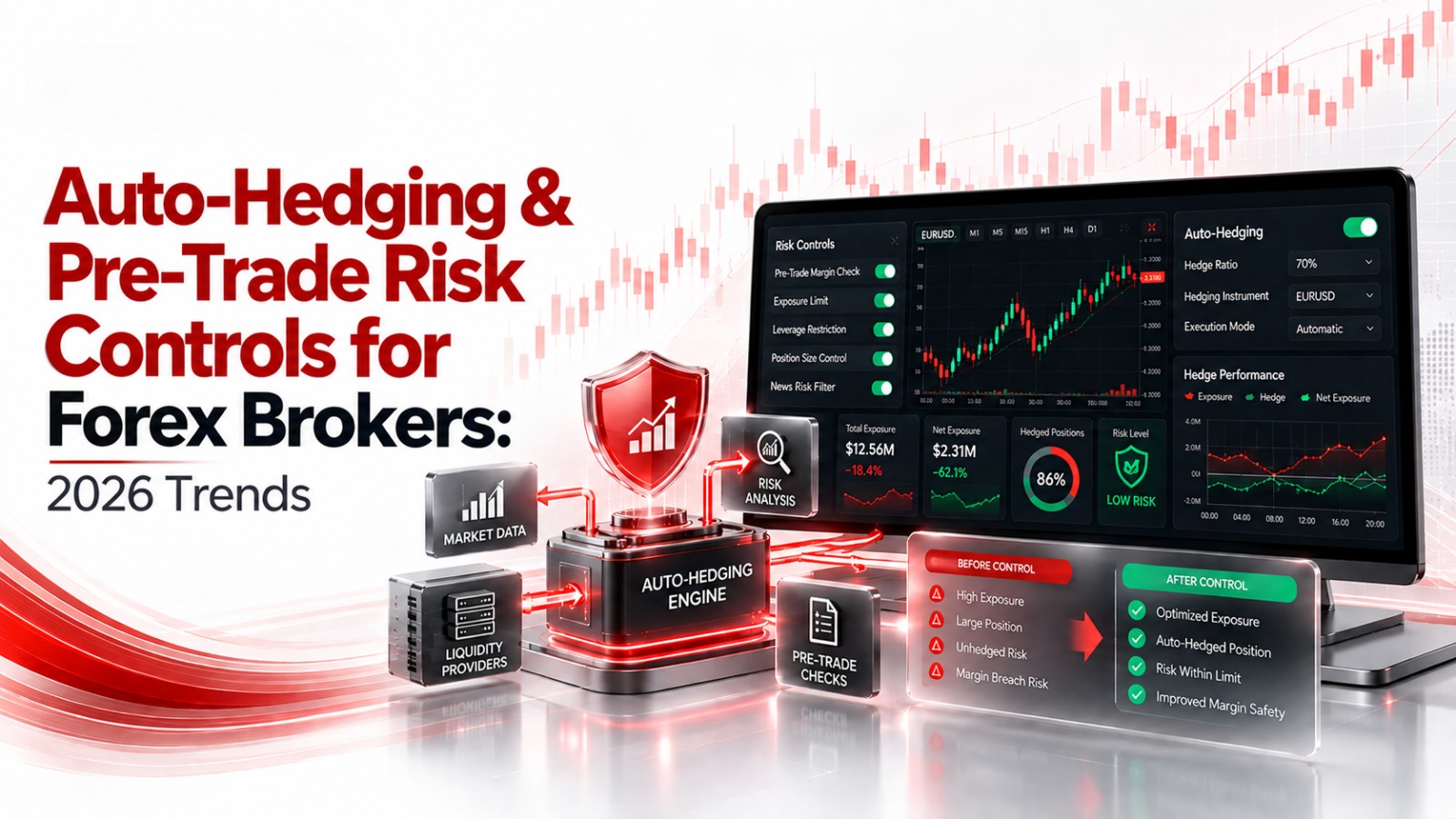
The forex market in 2026 is becoming increasingly dependent on automation, real-time exposure monitoring, and tighter controls around trade execution. For brokers, managing risk is no longer limited to monitoring positions after trades have been opened. Modern risk infrastructure increasingly focuses on identifying exposure before an order reaches the market and automatically responding when predefined risk thresholds are reached.
Why Pre-Trade Risk Controls Matter in 2026
Pre-trade risk controls are mechanisms that evaluate an order before it is executed. Instead of waiting for a position to create unwanted exposure, the system can assess factors such as trade size, available margin, client exposure, instrument limits, account conditions, and broker-level risk parameters.
This approach gives brokers an additional layer of protection against excessive exposure and operational errors. It can also help create consistent risk policies across different client groups, instruments, liquidity providers, and trading environments.
In a fast-moving market, milliseconds can matter. Automated controls can evaluate orders continuously without depending entirely on manual intervention.
Auto-Hedging Is Becoming More Sophisticated
Auto-hedging allows brokers to automatically offset selected client exposure in external liquidity pools or other hedging venues. Traditional approaches often relied on relatively straightforward rules, such as hedging whenever exposure exceeded a specific threshold.
In 2026, the trend is toward more dynamic models.
Modern systems can incorporate exposure by currency pair, direction, client segment, account type, liquidity provider, and aggregate book position. Instead of treating every trade equally, brokers can establish different hedging rules based on their risk framework.
For example, a broker may allow smaller client positions to remain internally managed while automatically hedging larger aggregate exposure. Similarly, specific currency pairs may have different thresholds because of their liquidity characteristics or volatility.
The objective is not simply to hedge everything. It is to automate the execution of a broker’s predefined risk strategy.
The Role of Trading Risk Management Software
Trading Risk Management Software is increasingly becoming a central component of broker infrastructure. It can connect trading platforms, liquidity providers, execution systems, client accounts, and risk engines to provide a consolidated view of exposure.
Important capabilities can include:
-
Real-time position and exposure monitoring
-
Pre-trade margin and exposure checks
-
Automated hedging rules
-
Maximum position limits
-
Client-level risk parameters
-
Currency and instrument exposure monitoring
-
Stop-out and margin controls
-
Liquidity-provider routing rules
-
Automated alerts and escalation
-
Risk reporting and historical analysis
Integration is particularly important. A risk engine that operates independently from execution infrastructure can create delays or fragmented information. Brokers increasingly need risk controls that work within the broader trading technology stack.
Key Pre-Trade Controls for Forex Brokers
Pre-trade controls can be configured at several levels. At the account level, brokers can establish maximum trade sizes, margin requirements, leverage restrictions, and exposure limits.
At the instrument level, controls can restrict the maximum position size or aggregate exposure for specific currency pairs. At the client-segment level, brokers can apply different parameters according to account type, jurisdiction, trading profile, or internal risk classification.
Another important control is price validation. Orders can be checked against acceptable price ranges before execution, helping identify potentially abnormal or erroneous orders.
Velocity controls are also becoming increasingly relevant. If an account suddenly generates an unusually large number of orders within a short period, automated rules can flag, restrict, or route those orders according to predefined policies.
These controls create multiple checkpoints before an order contributes to the broker’s overall market exposure.
Advanced Forex Risk Management Solutions and Real-Time Analytics
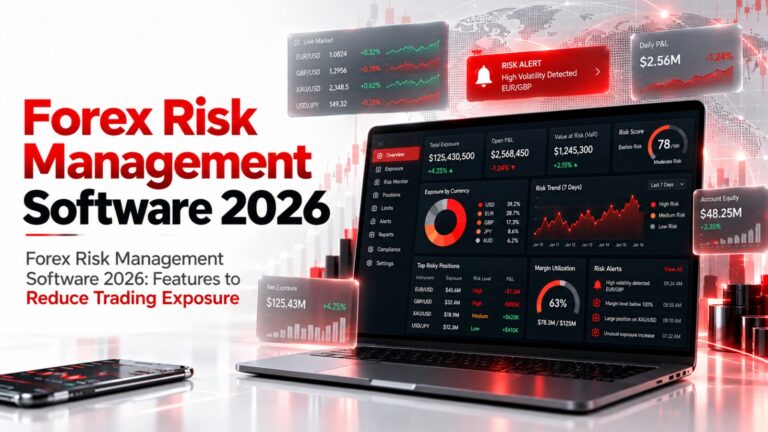
Advanced Forex Risk Management Solutions increasingly combine automation with real-time analytics. Instead of showing only open positions, modern systems can provide a broader view of gross exposure, net exposure, unrealized profit and loss, margin utilization, concentration, and liquidity-provider distribution.
Real-time dashboards allow risk teams to identify changing exposure across currencies and accounts. Automated alerts can then highlight situations that require attention.
Analytics can also support scenario analysis. Brokers can model how changes in currency prices, volatility, or client positions could affect their risk profile.
This creates a more proactive approach. Risk teams are not simply reacting to current losses or exposure; they can evaluate potential outcomes and adjust predefined controls accordingly.
AI and Data-Driven Risk Decisions
One of the emerging 2026 trends is the increasing use of data-driven models alongside deterministic risk rules.
Traditional risk controls remain essential because brokers need transparent and predictable policies. However, analytical models can help identify unusual trading patterns, rapidly changing exposure, or emerging concentration risks.
For example, a system could identify that exposure is increasing unusually quickly in a particular currency pair or client segment. The broker can then use predefined rules to trigger additional monitoring or adjust hedging requirements.
The important distinction is between risk detection and risk policy. Data-driven systems can identify patterns, while the broker’s configured risk framework determines what action should follow.
Automation Across Liquidity Providers
Liquidity management is another area where automated risk controls are becoming important. Brokers may work with multiple liquidity providers, each with different pricing, execution, and exposure characteristics.
Automated routing can help distribute orders according to predefined rules. These rules may consider available liquidity, exposure limits, instrument availability, or broker-defined routing preferences.
When integrated with auto-hedging, the system can provide a coordinated workflow from order validation to execution and subsequent exposure management.
This reduces dependence on manual monitoring and can make risk processes more consistent across trading sessions.
Why Forex Risk Management Services Remain Important
Technology alone does not create an effective risk framework. Brokers still need appropriate risk policies, system configuration, monitoring procedures, and ongoing optimization.
This is where Forex Risk Management Services can complement internal technology teams. External specialists can support areas such as risk architecture, exposure analysis, hedging configuration, liquidity management, platform integration, and operational risk processes.
For brokers expanding into new instruments, markets, or client segments, professional services can also help review whether existing risk parameters remain appropriate for the new operating environment.
What Brokers Should Prioritize in 2026
A modern broker risk framework should focus on several core capabilities: real-time visibility, configurable pre-trade controls, automated hedging, centralized exposure management, integration with trading infrastructure, and detailed reporting.
Scalability is equally important. Risk systems should be capable of handling increasing transaction volumes without creating unnecessary execution bottlenecks.
Transparency also matters. Risk teams should be able to understand why an order was restricted, routed, rejected, or hedged. Clear audit trails can support internal governance and operational review.
Conclusion
In 2026, forex risk management is moving toward a more proactive and automated model. Auto-hedging helps brokers manage exposure dynamically, while pre-trade risk controls provide an additional layer of protection before transactions enter the market.
The combination of Trading Risk Management Software, Advanced Forex Risk Management Solutions, and specialized Forex Risk Management Services can give brokers the infrastructure needed to monitor exposure, automate predefined responses, and manage increasingly complex trading environments.
For brokers evaluating their technology stack, the key question is no longer simply whether risk is being monitored. It is whether risk can be identified early, controlled consistently, and managed automatically across the entire trading lifecycle.
Frequently Asked Questions
1. What is auto-hedging in forex trading?
Auto-hedging is an automated process that offsets a broker’s market exposure according to predefined risk rules. When exposure reaches a specified threshold, the system can automatically execute a hedge through an appropriate liquidity provider or trading venue.
2. What are pre-trade risk controls for forex brokers?
Pre-trade risk controls evaluate an order before execution. They can check factors such as margin availability, maximum trade size, account exposure, leverage, instrument limits, and aggregate broker exposure before allowing, restricting, or rejecting a trade.
3. How does Trading Risk Management Software help forex brokers?
Trading Risk Management Software provides tools for real-time exposure monitoring, automated hedging, position limits, margin controls, risk alerts, liquidity management, and reporting. It helps brokers apply consistent risk policies across accounts, instruments, and trading environments.
4. What are Advanced Forex Risk Management Solutions?
Advanced Forex Risk Management Solutions combine real-time analytics, automated risk controls, exposure monitoring, pre-trade validation, auto-hedging, and configurable risk rules. These solutions are designed to help brokers manage market and operational exposure more systematically.
5. Do forex brokers need Forex Risk Management Services?
Forex Risk Management Services can support brokers with risk-framework design, hedging strategies, liquidity management, technology integration, exposure analysis, and ongoing optimization. They can be particularly useful when brokers are scaling their operations or introducing new instruments and client segments.