Running a forex brokerage in 2026 is more challenging than ever. Markets react in seconds, regulations continue to evolve, and traders expect fast execution with a seamless experience. At the same time, competition is becoming more intense as brokers fight to attract and retain clients.
Success today requires more than basic tools and disconnected systems. The right forex brokerage solutions help brokers manage risk, improve operations, strengthen compliance, and create a scalable foundation for growth.
In this guide, you’ll discover what forex brokerage solutions include, why they matter, and how choosing the right technology partner can support long-term business success.
What Are Forex Brokerage Solutions?
The forex brokerage solutions are the integrated systems, services, and technologies that allow a forex broker to operate, grow, and manage risk effectively.
They go far beyond trading software. A complete ecosystem covers everything from client onboarding and CRM to liquidity access, regulatory compliance, and real-time risk monitoring.
For context, a retail broker serving thousands of active traders simultaneously needs:
- A reliable trading infrastructure to handle order flow
- A liquidity management layer to ensure competitive pricing
- A risk management system to control exposure
- CRM tools to manage client relationships
- Compliance infrastructure to meet regulatory obligations
Without these working together, brokers face operational bottlenecks, financial risk, and client churn. The right brokerage solutions tie everything into one coherent operating model.
Key Components of Forex Brokerage Solutions
Liquidity Management Solutions
Reliable liquidity is essential for broker growth and profitability. Liquidity solutions connect brokers with multiple providers to deliver tighter spreads, faster execution, and competitive pricing. Features like liquidity aggregation and smart order routing help improve trade quality while protecting margins.
Risk Management Systems
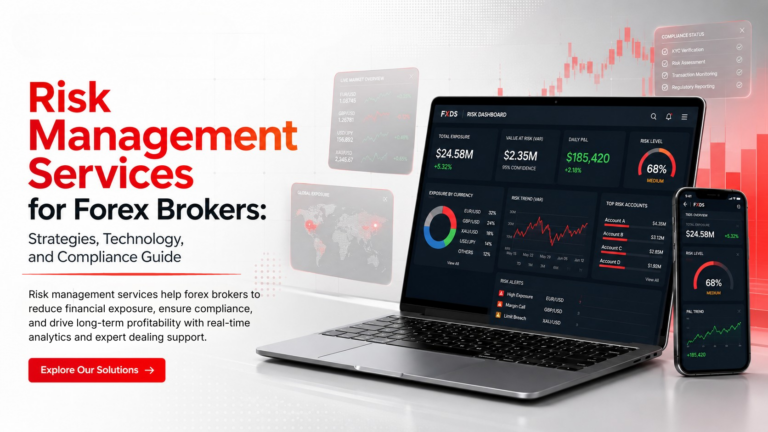
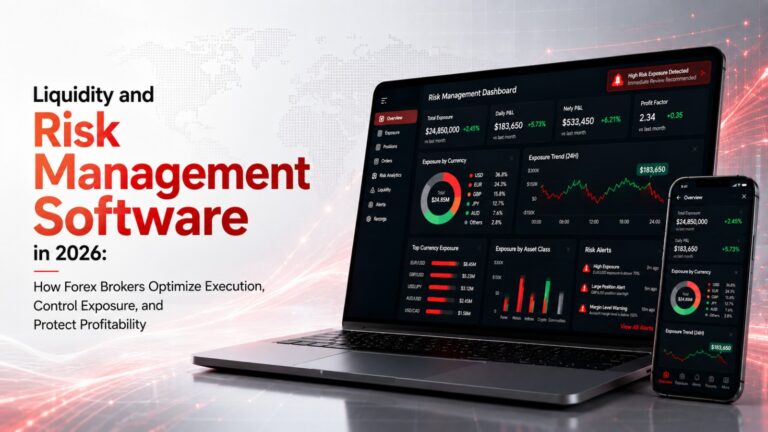
Strong forex risk management helps brokers control exposure and reduce financial risks. Modern systems provide real-time monitoring, automated hedging, risk alerts, and P&L tracking, allowing brokers to respond quickly to changing market conditions.
CRM and Client Management
A forex CRM helps manage the complete client journey, from onboarding and KYC to communication and retention. Integrated CRM systems improve efficiency, identify valuable clients, and create a more personalized client experience.
Trading Infrastructure
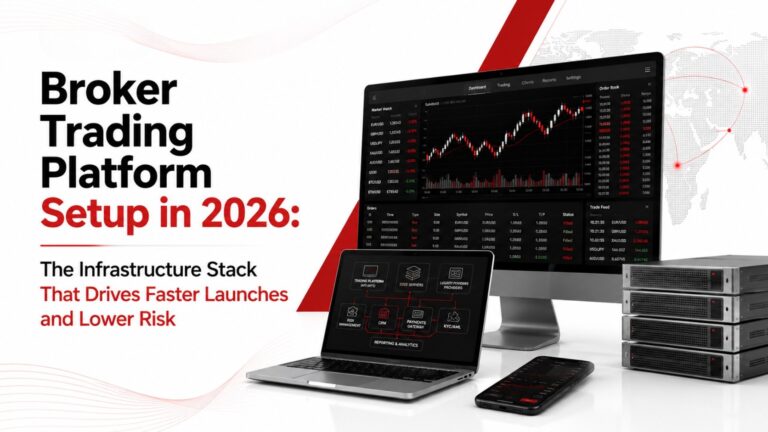
Trading infrastructure is the backbone of a brokerage operation. Reliable systems support low-latency execution, multi-platform connectivity, scalability, and stable performance to ensure smooth trading operations.
Compliance and Regulatory Support
Compliance technology helps brokers handle KYC, AML processes, reporting requirements, and audit tracking. Automated workflows reduce manual work and help maintain regulatory standards.
Real-Time Analytics
Real-time analytics provide insights into trading activity, client behavior, risk exposure, and business performance. Better visibility enables brokers to make faster and more informed decisions.
Dealing Desk Services
Dealing desk solutions help brokers manage order flow, optimize execution, and improve exposure management. Effective dealing support can strengthen profitability and support long-term business growth.
Major Challenges Forex Brokers Face in 2026
The forex brokerage industry faces a set of compounding pressures that make the right technology more important than ever.
Market volatility: has intensified across major currency pairs, driven by geopolitical shifts, central bank policy divergence, and algorithmic trading activity. Brokers without adequate risk controls face outsized exposure during fast markets.
Regulatory complexity: continues to grow. Jurisdictions from the EU to Southeast Asia are tightening capital requirements, client fund protection rules, and reporting obligations. Staying compliant across multiple licenses is a significant operational challenge.
Liquidity gaps: remain a real concern, particularly during off-hours or around major data releases. Brokers relying on a single liquidity provider are vulnerable to pricing gaps and execution failures.
Client retention: is harder than ever. Traders have more choice, and switching costs are low. Brokers that fail to deliver fast execution, transparent pricing, and responsive support lose clients to competitors quickly.
Operational risks: from technology failures to cybersecurity threats require constant attention. A trading platform outage during a major market event can cause both financial and reputational damage that is difficult to recover from.
How Technology Is Transforming Forex Brokerage Solutions
- Artificial intelligence and machine learning: Modern forex broker technology uses AI to detect unusual trading behavior, identify risk exposure, and support smarter hedging decisions through predictive analysis.
- Automation: Automated workflows simplify compliance, client onboarding, and back-office processes, reducing manual work and improving operational efficiency.
- Predictive analytics: Brokers can analyze trading patterns, forecast revenue trends, and identify operational risks before they affect performance.
- Cloud infrastructure: Cloud-based systems provide scalability, lower infrastructure costs, and reliable performance without significant capital investment.
- Real-time monitoring: Live monitoring of trading activity, liquidity, risk exposure, and client behavior enables faster responses to market changes.
- Smarter brokerage operations: Modern forex brokerage solutions deliver improved speed, efficiency, and cost savings compared to traditional systems.
The result is a new generation of forex brokerage solutions that are faster, smarter, and more cost-effective than anything available even five years ago.
Benefits of Choosing Comprehensive Forex Brokerage Solutions
Working with a provider that covers all key areas of brokerage technology delivers compounding benefits across the business:
- Scalability: Technology that grows with your client base and trading volumes without requiring repeated system overhauls
- Cost reduction: Consolidated solutions reduce vendor complexity, integration costs, and operational overhead
- Better compliance: Automated, technology-driven compliance processes reduce the risk of regulatory penalties
- Improved client experience: Faster execution, cleaner onboarding, and responsive support increase client satisfaction and retention
- Reduced risk exposure: Integrated risk management tools protect the firm from outsized losses during volatile periods
- Operational efficiency: Streamlined workflows across trading, risk, compliance, and client management allow teams to do more with less
These advantages compound over time. A broker that invests in the right infrastructure in 2026 is better positioned to attract institutional clients, expand into new markets, and compete with larger, more established firms.
How to Choose the Right Forex Brokerage Solutions Provider
Not every provider delivers equally. When evaluating your options, consider the following criteria carefully.
Technology stack: Is the underlying technology modern, well-maintained, and capable of integrating with your existing systems? Outdated infrastructure creates long-term problems.
Scalability: Can the solution handle growth? A provider that works for a startup may not serve the needs of a mid-sized broker with thousands of active clients.
Support: What level of ongoing support is offered? For mission-critical trading infrastructure, round-the-clock technical support is non-negotiable.
Security: How is client data protected? What cybersecurity standards does the provider meet? What happens in the event of a breach or system failure?
Compliance capabilities: Does the provider understand the regulatory environments you operate in? Can they support multi-jurisdictional compliance requirements?
Customization: Every brokerage has unique operational requirements. A provider willing to adapt their solution to your specific needs is more valuable than one offering only off-the-shelf products.
Ask potential providers for references from brokers of comparable size and business model. Real-world performance matters more than sales presentations.
Why FXDS Can Help Forex Brokers Scale Efficiently
FXDS supports forex brokers with technology and operational expertise designed for sustainable growth. Its risk management services help monitor and manage exposure in real time with tailored solutions for different brokerage models.
The company also provides dealing solutions to improve order flow, optimize book management, and support better hedging decisions. Advanced analytics offer insights into client activity, profitability, and overall business performance.
Beyond technology, FXDS works closely with brokers by providing operational guidance and liquidity expertise. This helps firms access efficient pricing, improve execution, and build a stronger brokerage operation at any growth stage.
Conclusion
Forex brokerage solutions are essential for brokers aiming to grow in 2026. Integrated tools for risk management, liquidity, compliance, CRM, and analytics help firms handle market volatility, improve client retention, and scale efficiently. The right solution should align with your business goals, operational needs, and growth strategy. Choosing an experienced provider with flexible technology and industry expertise can support long-term performance and profitability.
Explore how FXDS helps brokers optimize operations and accelerate your growth.