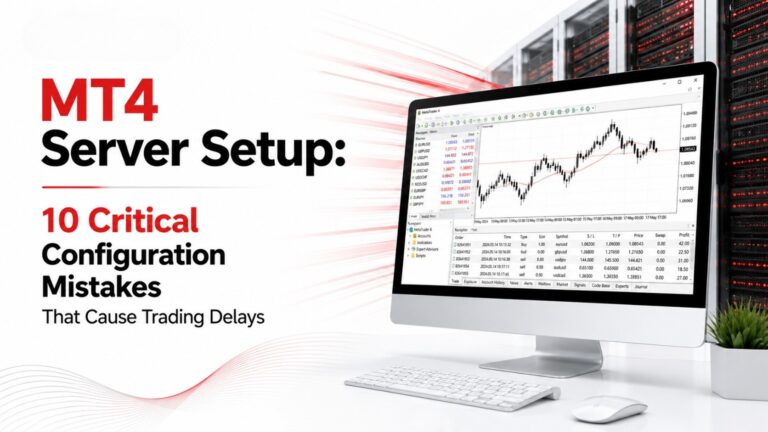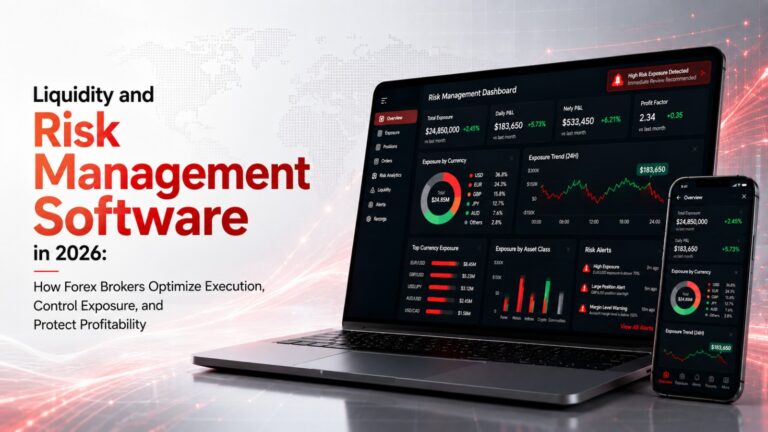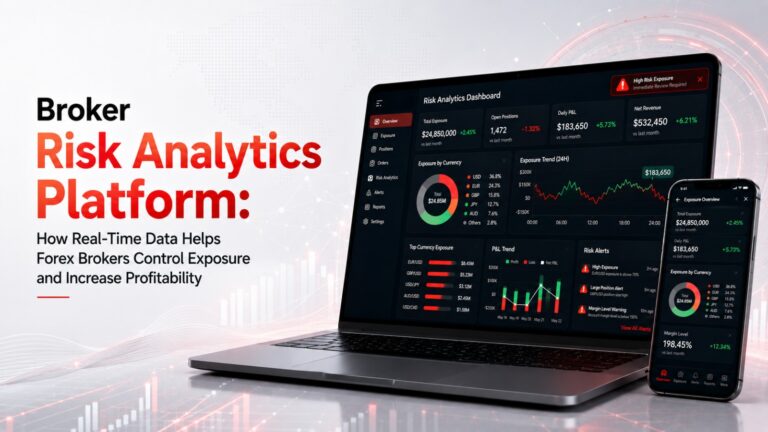
For forex brokers in 2026, trading platform infrastructure is no longer simply a technical requirement. The performance of the MT4 or MT5 server environment directly affects execution quality, platform availability, client experience, risk management, and the ability to scale operations.
A properly configured MetaTrader environment requires more than installing the platform. Brokers must consider server location, dedicated hosting, liquidity connectivity, bridge configuration, security, backups, monitoring, and capacity planning. As trading volumes increase and brokerages support more clients, these infrastructure decisions become increasingly important.
This guide explores the key considerations for MT4 & MT5 server setup and management in 2026, including hosting, security, scalability, performance optimization, and integration with broader Forex Brokerage Solutions.
Why MT4 & MT5 Server Infrastructure Matters
MT4 and MT5 remain important components of the forex brokerage technology stack. However, the trading platform itself is only one part of the infrastructure.
A brokerage environment typically includes:
MT4 or MT5 trading servers
Liquidity provider connections
Bridges and gateways
Risk management systems
Client management and CRM platforms
Monitoring and reporting tools
Backup and disaster recovery systems
Dealing desk infrastructure
If any critical component is poorly configured, brokers may experience execution delays, connectivity issues, platform instability, or inaccurate risk visibility.
Server infrastructure therefore needs to be designed around performance, reliability, security, and future trading volumes rather than simply the initial number of clients.
MT4 Server Setup: Key Infrastructure Considerations
A successful MT4 server setup begins with choosing the right hosting environment and network architecture.
Server location is particularly important because physical distance between the broker’s infrastructure and liquidity providers can introduce additional network latency. For production environments, brokers commonly consider financial data-center locations that provide strong connectivity to liquidity providers and major financial markets.
Dedicated resources are also important. Shared hosting can introduce unpredictable CPU, memory, storage, and network contention. A production MetaTrader environment should have resources that can be monitored and scaled according to trading activity.
Other important configuration areas include:
Server operating environment
CPU and memory allocation
Storage performance
Network redundancy
Liquidity connections
Bridge configuration
Plugin management
Database and log maintenance
Backup procedures
Monitoring and alerting
MT5 Server Setup and Multi-Asset Infrastructure
MT5 infrastructure introduces additional considerations because the platform supports a broader range of asset classes and account structures.
For brokers operating both MT4 and MT5, infrastructure needs to accommodate the differences between the platforms rather than treating them as identical environments.
MT5 can support forex alongside instruments such as equities, futures, and other exchange-traded products. Its account and position models can also influence how exposure, margin, and positions are calculated.
This makes server configuration, liquidity connectivity, monitoring, and risk controls particularly important for multi-asset brokerages.
Running MT4 and MT5 simultaneously can also create operational complexity. Brokers need centralized visibility across multiple servers so that dealing and risk teams can understand overall client exposure rather than viewing each environment in isolation.
Choosing the Right Hosting Environment
Hosting is one of the foundational decisions in MT4 and MT5 infrastructure.
A suitable production environment should provide:
- Dedicated Computing Resources: Trading infrastructure should have predictable CPU and memory availability. Resource contention can become particularly problematic during periods of high trading activity or market volatility.
- Low-Latency Connectivity: Network performance affects communication between trading servers, liquidity providers, bridges, and other infrastructure components. Strategic server placement and high-quality network connectivity can help reduce unnecessary latency.
- Redundancy: Production environments should account for hardware, power, network, and connectivity failures. Redundant infrastructure and tested failover procedures can reduce the operational impact of individual component failures.
- Monitoring: Infrastructure monitoring should track CPU utilization, memory consumption, network performance, connection status, execution latency, system errors, and other relevant indicators.
A server should not simply be monitored after something goes wrong. Proactive monitoring can help identify performance degradation before it becomes a client-facing issue.
Security for MT4 & MT5 Servers
Security should be integrated into the initial server deployment rather than added later.
MetaTrader infrastructure can contain sensitive account information, trading records, configuration data, and connectivity credentials. Poorly secured environments can therefore create operational and financial risks.
A comprehensive security strategy can include:
Firewall configuration
Restricted administrative access
Strong authentication policies
Controlled network ports
Regular security updates
Access logging
Secure credential management
Network segmentation
Continuous monitoring
Tested backup and recovery procedures
Administrative interfaces and unnecessary services should not be exposed publicly. Access should be limited to authorized personnel and appropriate network locations.
Backups should also be protected and regularly tested. Having a backup file is not enough; brokers need to verify that critical data and configurations can actually be restored.
Scalability: Preparing for Brokerage Growth
Scalability is one of the most important considerations when designing MT4 and MT5 infrastructure in 2026.
A brokerage may begin with a relatively small client base but later expand into additional regions, instruments, account types, or liquidity relationships. Infrastructure that works at launch may not necessarily perform effectively at higher volumes.
Scalable infrastructure should allow brokers to expand:
Number of trading accounts
Number of MT4/MT5 servers
Trading instruments
Liquidity connections
Client groups
Risk management capacity
Monitoring coverage
Multi-server architecture can provide greater flexibility by distributing operational workloads and allowing brokers to manage growing trading activity without relying on a single infrastructure component.
Connecting MT4 & MT5 With Risk Management
Server infrastructure and risk management should work together.
A modern brokerage needs visibility into client positions, account equity, margin, exposure, trading behavior, and liquidity flows. Real-time risk monitoring can help dealing and risk teams identify exposure concentrations and respond according to predefined rules.
This is where MT4 MT5 Risk Management Software becomes an important part of the broker infrastructure.
FXDS explains that modern risk management systems can consolidate positions, pending orders, equity, margin levels, and exposure across MT4 and MT5 environments. Advanced systems can also support automated alerts, hedging, position aggregation, and A-Book/B-Book controls.
Liquidity, Bridges and Execution
MT4 and MT5 servers also need reliable connections to liquidity providers.
A bridge typically acts as an important communication layer between the trading platform and external liquidity. Incorrect symbol mapping, execution parameters, lot-size configurations, or connectivity settings can lead to rejected orders, requotes, incorrect pricing, or execution problems.
Liquidity connections should therefore be tested before production deployment and continuously monitored afterward.
For growing brokers, multiple liquidity sources and appropriate connectivity infrastructure can also provide greater flexibility in managing execution and exposure.
Complete Forex Brokerage Solutions in 2026
MT4 or MT5 server management should not be viewed as an isolated technical task. It forms part of a much larger brokerage ecosystem.
Modern Forex Brokerage Solutions can combine:
MT4 and MT5 platform infrastructure
Server deployment and management
Risk management
Liquidity connectivity
Bridge integration
Dealing room support
Performance monitoring
Security and backup management
FXDS describes complete brokerage infrastructure as an integrated ecosystem covering platform infrastructure, risk analytics, dealing room support, and liquidity connectivity.
Best Practices for MT4 & MT5 Server Management
After deployment, server management should remain an ongoing operational process.
Key practices include:
Monitor infrastructure continuously – Track resource usage, latency, connectivity, and errors.
Audit configurations regularly – Review bridges, plugins, symbols, liquidity connections, and server settings.
Maintain databases and logs – Prevent unnecessary data accumulation from affecting performance.
Test backups – Verify that critical platform data can be restored.
Review security controls – Remove unnecessary access and services.
Load-test infrastructure – Test the environment against realistic and elevated trading volumes.
Plan capacity ahead of growth – Scale infrastructure before performance becomes a bottleneck.
Monitor liquidity connectivity – Maintain reliable primary and backup connections.
These practices can help brokers maintain a stable environment as client activity and operational complexity increase.
Conclusion
In 2026, MT4 and MT5 server setup is much more than platform installation. Hosting, network architecture, liquidity connectivity, security, monitoring, backups, risk management, and scalability all contribute to the overall performance of a brokerage infrastructure.
A well-designed environment can provide the foundation for reliable execution, better operational visibility, stronger security, and future expansion.
For brokers operating MT4, MT5, or both platforms, infrastructure should be designed as an integrated ecosystem rather than a collection of separate technical components. Combining optimized server management with MT4 MT5 Risk Management Software and broader Forex Brokerage Solutions can create a more structured foundation for managing trading operations and supporting long-term brokerage growth.
FAQs
1. What is involved in MT4 and MT5 server setup?
MT4 and MT5 server setup typically involves hosting selection, server configuration, network connectivity, liquidity integration, bridge configuration, security hardening, backups, monitoring, and performance testing.
2. Why is server location important for forex brokers?
Server location can affect network latency between the trading platform, liquidity providers, and other infrastructure. Selecting an appropriate data-center location can help optimize connectivity and execution performance.
3. Is dedicated hosting recommended for MT4 and MT5?
Production brokerage environments generally benefit from dedicated and predictable computing resources because shared infrastructure can create resource contention during periods of high trading activity.
4. How does risk management software integrate with MT4 and MT5?
Risk management software can connect with MetaTrader server environments to monitor positions, exposure, margin, account activity, and other risk indicators in real time. It can also support automated alerts and hedging workflows.
5. How can brokers scale MT4 and MT5 infrastructure?
Brokers can scale by adding server capacity, expanding multi-server architecture, optimizing connectivity, increasing monitoring coverage, and integrating infrastructure with scalable risk and liquidity management systems.
6. Why are security and backups important for MetaTrader infrastructure?
Security controls help protect trading infrastructure and sensitive data, while tested backups and recovery procedures help brokers restore critical configurations and information following infrastructure failures.
7. What are complete Forex Brokerage Solutions?
Complete Forex Brokerage Solutions combine platform infrastructure, risk management, liquidity connectivity, bridge technology, dealing room support, monitoring, and other operational services required to run a brokerage efficiently.