
The forex brokerage industry operates in an environment where market prices change within milliseconds, trading volumes fluctuate unexpectedly, and client behavior can directly influence profitability. For brokers managing thousands of positions across multiple asset classes, relying on manual reports or delayed data is no longer enough.
A modern Broker Risk Analytics Platform gives Forex brokers complete visibility into their risk exposure as it happens. By collecting real-time trading data, analyzing client positions, identifying abnormal trading patterns, and supporting faster hedging decisions, these platforms help brokerages maintain healthy risk levels while maximizing revenue opportunities.
This article explains how broker risk analytics technology works, the key capabilities brokers should look for, and why real-time risk intelligence has become a critical component of sustainable Forex brokerage operations.
What Is a Broker Risk Analytics Platform?
A Broker Risk Analytics Platform is specialized software designed to help Forex brokers monitor, analyze, and control financial risk generated by client trading activities.
The platform consolidates data from trading platforms such as MT4 and MT5, liquidity providers, pricing engines, and dealing systems to provide a centralized view of the broker’s overall exposure.
Instead of reviewing historical reports after market movements have already affected the business, risk managers receive real-time insights into:
- Net open exposure by currency pair and instrument.
- Client profitability patterns.
- Trading volume concentration.
- Abnormal or potentially toxic trading behavior.
- Liquidity utilization and hedge requirements.
This immediate visibility enables brokers to make informed decisions about A-Book and B-Book allocation, adjust risk parameters, and protect their trading infrastructure from unexpected losses.
Why Real-Time Data Is Essential for Forex Broker Risk Management
The success of a brokerage depends on its ability to balance client activity, liquidity costs, and market exposure. Real-time data provides the operational intelligence required to maintain this balance.
Managing Market Exposure Before It Becomes a Loss
A sudden increase in client positions on a particular currency pair can create significant directional exposure. Without real-time monitoring, a broker may discover this imbalance only after market volatility causes substantial losses.
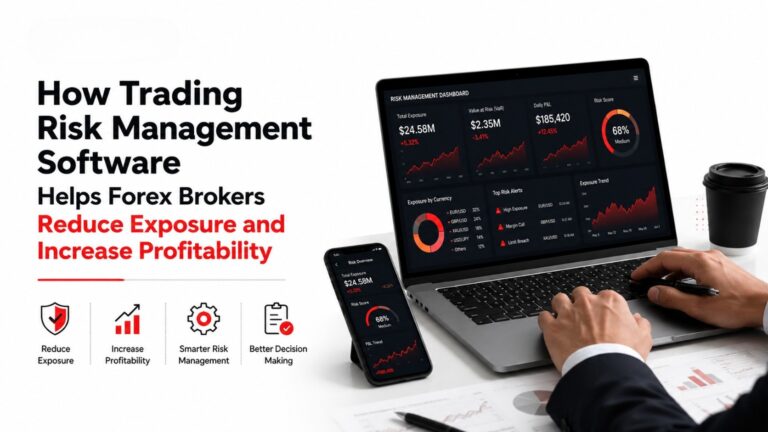
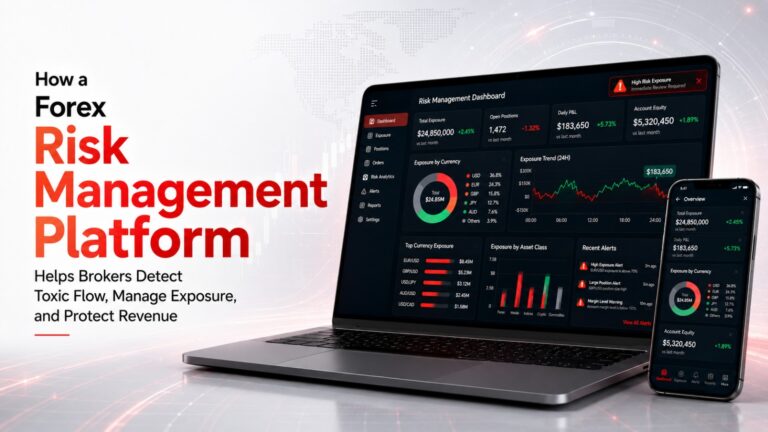
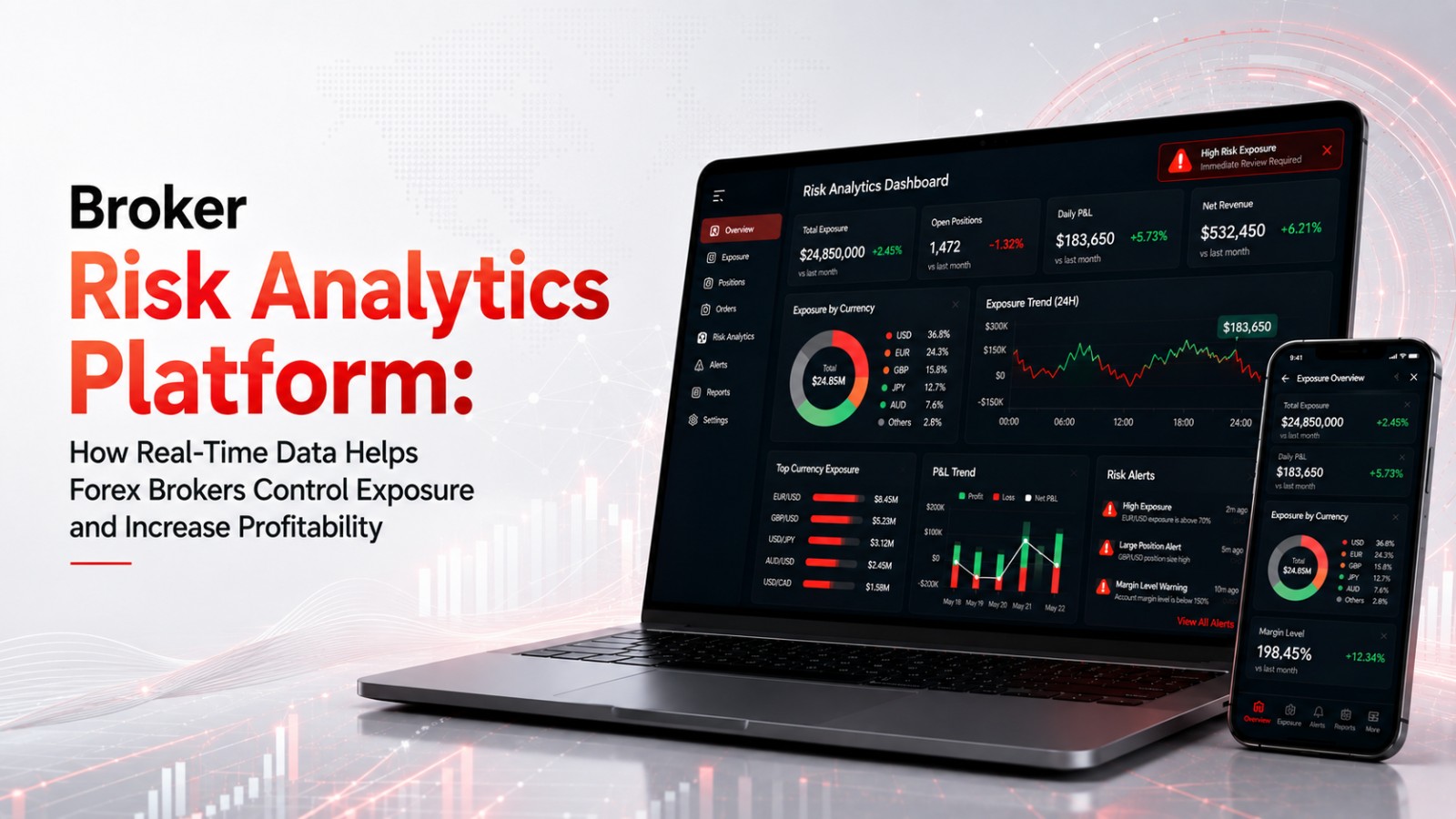
A risk analytics dashboard continuously tracks open positions, net exposure, and unrealized profit and loss, allowing dealers and risk managers to take immediate action through hedging or adjusting execution strategies.
Improving A-Book and B-Book Decision Making
Many successful Forex brokers operate hybrid risk models where some trades are internally managed through the B-Book, while higher-risk flows are passed to liquidity providers through the A-Book.
A Broker Risk Analytics Platform helps identify which clients generate consistent profits, which trading strategies present higher risk, and which order flow should be routed externally.
This data-driven approach improves risk allocation and helps brokers achieve better profitability while maintaining acceptable exposure levels.
Detecting Toxic Flow and Arbitrage Trading
Advanced traders may use latency arbitrage, high-frequency strategies, or other techniques that exploit pricing delays and execution inefficiencies.
Real-time trading risk analytics can identify suspicious patterns, including unusually consistent profits, abnormal execution timing, and concentrated trading activity. This allows brokers to apply protective measures, adjust execution settings, or modify routing strategies before these activities impact revenue.
Key Features of an Advanced Forex Risk Analytics Software
Not all risk management systems provide the same level of visibility. A professional Forex risk analytics software should include several critical capabilities.
- Real-Time Exposure Monitoring: Risk teams should have access to live dashboards displaying exposure by asset, symbol, client group, and account type. This allows brokers to identify concentrations of risk instantly rather than waiting for end-of-day reports.
- Automated Risk Alerts: A robust system should allow customized alerts based on predefined thresholds, such as excessive exposure, unusual trading activity, or sudden increases in client profitability. Automated notifications ensure that risk managers can react immediately to changing market conditions.
- Client Segmentation and Behavior Analysis: Understanding client behavior is essential for effective risk management. Analytics platforms categorize traders based on profitability, trading frequency, strategy, holding periods, and other behavioral indicators. This information helps brokers make smarter decisions regarding client treatment, spread management, and execution routing.
- Liquidity and Hedging Analytics: Liquidity costs have a direct impact on a broker’s bottom line. Advanced platforms provide insights into liquidity provider performance, hedge efficiency, execution quality, and trading costs. These analytics help brokers optimize liquidity relationships and reduce unnecessary expenses.
How Broker Risk Analytics Increases Forex Brokerage Profitability
Risk management is not only about reducing losses; it is also a major driver of business growth and operational efficiency. By understanding client behavior and exposure trends, brokers can maintain a more profitable B-Book strategy while transferring appropriate risk to external liquidity providers.
Real-time analytics also helps reduce over-hedging. Some brokers hedge more positions than necessary due to limited visibility, resulting in increased liquidity costs. Accurate exposure data allows more precise hedging decisions.
Additionally, detailed performance analytics helps management identify profitable client segments, improve pricing strategies, and enhance overall trading conditions.
Challenges Forex Brokers Face Without a Real-Time Risk Analytics Platform
Brokerages that depend on delayed reports or manual monitoring often encounter several operational challenges:
- Unexpected exposure accumulation during volatile markets.
- Slow reaction to abnormal trading behavior.
- Inefficient A-Book and B-Book allocation.
- Higher liquidity and hedging costs.
- Limited visibility across multiple trading platforms.
- Difficulty identifying profitability trends.
As trading volumes continue to increase and algorithmic strategies become more sophisticated, these limitations can significantly affect a broker’s competitive position.
Choosing the Right Broker Risk Analytics Platform
When evaluating a Broker Risk Analytics Platform, Forex brokers should consider factors beyond basic reporting capabilities.
A reliable solution should offer:
- Real-time data processing with minimal latency.
- Integration with MT4, MT5, and multiple liquidity providers.
- Flexible dashboards and customizable risk metrics.
- Advanced client segmentation tools.
- Automated alerts and risk threshold management.
- Scalability to support business growth.
- Secure data management and reliable system uptime.
The ideal platform should act as a central intelligence hub that enables dealing desks, risk teams, and management to make faster and more accurate decisions.
Future Trends in Forex Broker Analytics and Risk Management
The future of broker risk management is increasingly driven by artificial intelligence, machine learning, and predictive analytics.
Modern systems are moving beyond historical reporting toward predictive risk modeling that can identify potential exposure problems before they develop. AI-based models can recognize complex trading patterns, forecast liquidity requirements, and recommend optimal hedging strategies.
As the Forex market becomes more automated, brokers that invest in advanced analytics technology will have greater control over risk, improved operational efficiency, and stronger long-term profitability.
Conclusion
In a highly competitive Forex environment, successful brokers rely on accurate data rather than assumptions. A powerful Broker Risk Analytics Platform provides the visibility required to monitor exposure, identify trading risks, optimize liquidity strategies, and improve overall profitability.
For Forex brokers seeking stronger control over their operations, investing in advanced real-time risk analytics is no longer just a technology upgrade, it is a strategic requirement. FXDS delivers sophisticated Forex broker risk management solutions designed to provide deeper exposure insights, smarter risk decisions, and greater operational efficiency.
Frequently Asked Questions
Q1. What is a Broker Risk Analytics Platform?
A Broker Risk Analytics Platform is a software solution that helps Forex brokers monitor real-time exposure, analyze client trading behavior, manage liquidity, and make informed risk management decisions.
Q2. Why do Forex brokers need real-time risk analytics?
Real-time analytics allows brokers to identify exposure changes instantly, react quickly to market volatility, detect toxic trading flow, and optimize hedging decisions.
Q3. How does a risk analytics platform improve broker profitability?
It improves profitability by reducing unnecessary hedging costs, optimizing A-Book and B-Book strategies, identifying profitable client segments, and preventing excessive risk exposure.
Q4. Can a Broker Risk Analytics Platform detect toxic flow?
Yes. Advanced platforms analyze trading behavior, execution patterns, and client profitability to identify potentially harmful strategies such as latency arbitrage and aggressive high-frequency trading.
Q5. What features should Forex brokers look for in risk analytics software?
Important features include real-time exposure dashboards, automated alerts, client segmentation, liquidity analytics, multi-platform integration, and customizable risk controls.
Q6. Does broker risk analytics support MT4 and MT5 platforms?
Most professional solutions integrate with MT4 and MT5, allowing brokers to collect trading data, analyze exposure, and manage risk from a centralized dashboard.