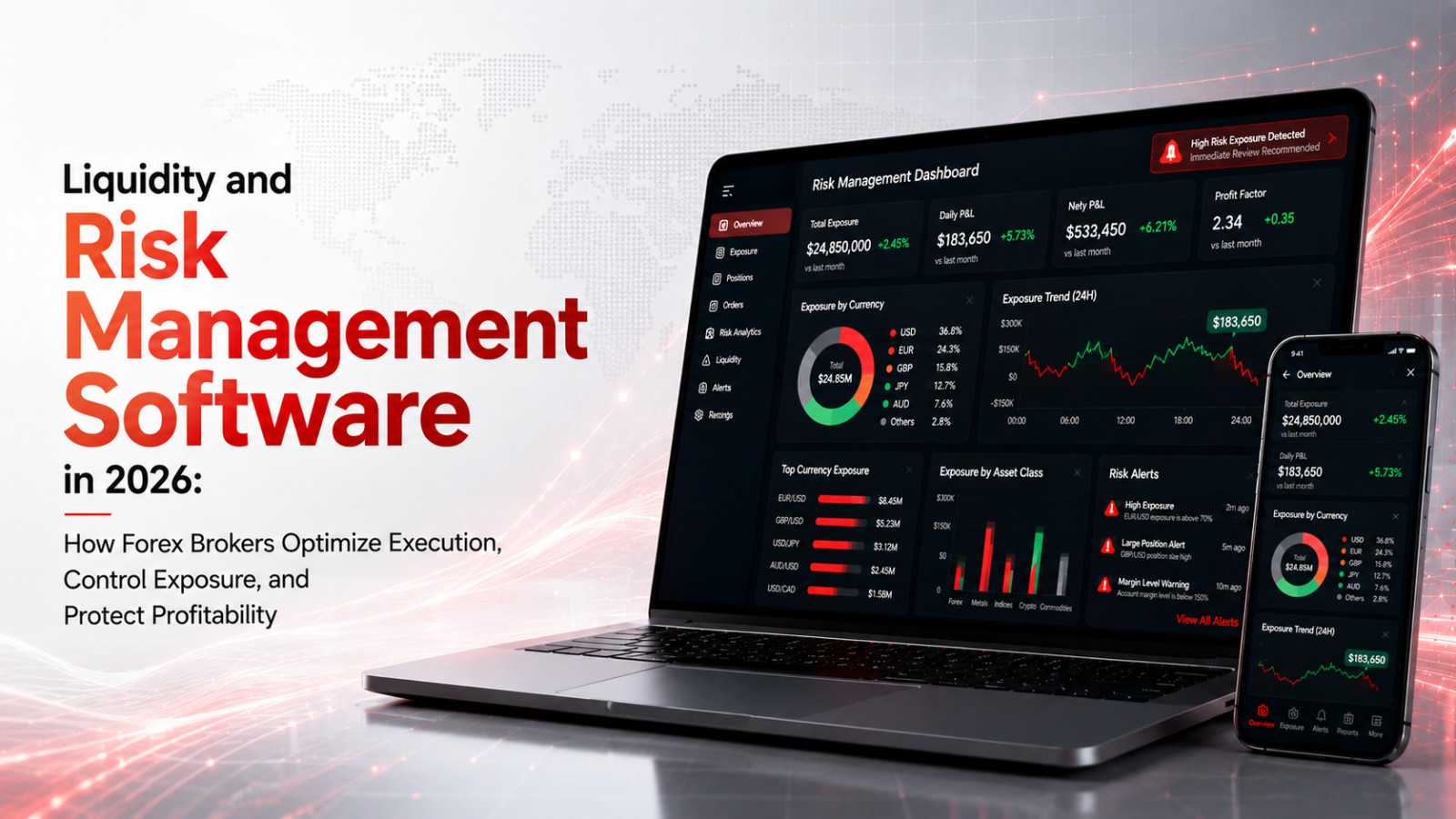
The forex brokerage industry in 2026 operates in an environment where market volatility, high-frequency trading, tighter regulatory expectations, and sophisticated client trading strategies have significantly increased risk exposure. For brokers, managing risk manually or relying on outdated systems is no longer sufficient.
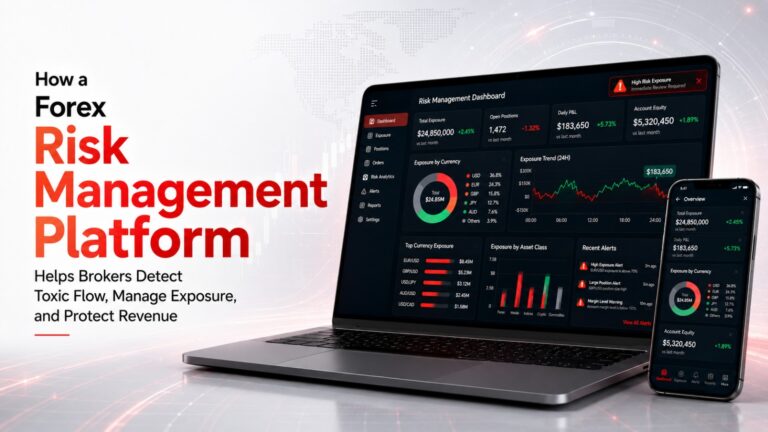
Forex Risk Management Software has become a core part of a modern brokerage infrastructure, helping firms monitor client exposure in real time, identify unusual trading behavior, optimize A-Book and B-Book execution, and maintain stable profitability.
A powerful risk management platform gives brokers complete visibility across trading operations, liquidity relationships, and client activity. With advanced analytics, automation, and intelligent decision-making tools, brokers can reduce unnecessary losses while delivering a reliable trading environment to their clients.
What Is Forex Risk Management Software?
The Forex Risk Management Software is a specialized technology solution designed to help forex brokers identify, measure, monitor, and control financial risks generated from client trading activities.
Unlike basic reporting tools, modern forex broker risk management software continuously analyzes open positions, client behavior, market volatility, exposure levels, and liquidity conditions in real time.
A sophisticated risk engine enables brokers to:
- Track net and gross exposure across currency pairs.
- Monitor client profitability patterns.
- Detect potentially harmful trading strategies.
- Automate hedging decisions.
- Manage liquidity provider relationships.
- Configure A-Book, B-Book, or hybrid execution models.
For example, if a large number of clients simultaneously build positions on a major currency pair before a high-impact economic announcement, the system can immediately alert the dealing desk or trigger automated hedging rules to reduce exposure.
Why Modern Forex Brokers Need Advanced Risk Management Technology
The structure of forex trading has changed significantly. Algorithmic traders, low-latency strategies, and increasing market participation have created new challenges for brokerages.
A broker that lacks real-time forex risk analytics may experience delayed responses to sudden market movements, toxic trading flow, or concentrated client positions.
Modern Forex Risk Management Software provides:
- Instant visibility into risk exposure.
- Better decision-making through advanced analytics.
- Improved capital efficiency.
- Reduced operational workload.
- Greater control over liquidity costs.
For growing brokerages, effective risk management is not only about preventing losses; it is also about creating a sustainable operational model capable of scaling with increased trading volume.
Key Risks Faced by Forex Brokers in 2026
- Market Exposure Risk: When a broker retains significant client positions internally, rapid price movements can result in substantial financial losses. Continuous exposure monitoring allows brokers to understand their risk at every moment.
- Toxic Flow and Latency Arbitrage: Professional traders may use ultra-fast execution strategies to exploit pricing delays between brokers and liquidity providers. These activities can create consistent losses if they are not identified quickly.
- Liquidity Risk: Insufficient access to quality liquidity providers may cause execution issues, wider spreads, and increased trading costs during volatile periods.
- Client Concentration Risk: Heavy trading activity from a small group of highly profitable clients can create disproportionate exposure, requiring brokers to adjust their execution strategy.
10 Essential Features Every Forex Risk Management Software Must Have
1. Real-Time Exposure Monitoring and Position Management
Real-time exposure management allows brokers to track their overall risk across symbols, client groups, and accounts without waiting for delayed reports. A comprehensive dashboard should display net exposure, unrealized profit and loss, trading volume, and historical risk patterns.
2. Toxic Flow Detection and Latency Arbitrage Protection
Advanced systems use trading pattern analysis to identify potentially harmful behavior such as latency arbitrage, excessive scalping, or abnormal execution patterns. Early detection enables brokers to apply routing rules, adjust execution models, or hedge affected positions.
3. A-Book, B-Book, and Hybrid Model Management
Successful brokers often use a combination of execution models.
- A-Book routes client trades to external liquidity providers.
- B-Book retains risk internally.
- Hybrid models intelligently allocate trades based on predefined risk parameters.
Modern software provides automated decision engines to optimize these models based on client performance and market conditions.
4. Automated Hedging and Liquidity Risk Control
Automated forex hedging solutions help brokers reduce market exposure by automatically sending offsetting orders to liquidity providers when predefined thresholds are reached. This reduces manual intervention and allows faster responses during periods of extreme volatility.
5. MT4/MT5 Integration and Dealing Desk Support
Since many brokers operate using MetaTrader platforms, seamless MT4 and MT5 risk management software integration is essential. The software should provide direct access to trading data, dealer controls, exposure reports, and execution management tools.
6. AI-Powered Risk Analytics and Predictive Monitoring
Artificial intelligence and machine learning are becoming increasingly valuable in forex brokerage risk management. AI models can analyze historical trading data, identify unusual patterns, predict potential exposure risks, and recommend optimal risk actions before losses occur.
7. Customizable Risk Rules and Alerts
Every brokerage has unique risk requirements. The ideal system allows customized alerts based on exposure limits, trading volume, client behavior, or market events.
8. Advanced Reporting and Business Intelligence
Detailed reports help risk managers understand profitability, client segmentation, liquidity performance, and long-term risk trends.
9. Multi-Asset Risk Monitoring
Many modern brokers offer CFDs, commodities, indices, and cryptocurrencies alongside forex. A unified platform should manage exposure across all asset classes.
10. Scalable Cloud-Based Infrastructure
As trading volume grows, brokers need software capable of processing millions of trading events with low latency and high reliability.
How to Choose the Right Forex Risk Management Software Provider
Choosing the right provider requires evaluating technology capabilities, reliability, and industry expertise.
Brokers should consider several factors:
- Real-time processing speed.
- Compatibility with MT4 and MT5.
- Automation capabilities.
- Quality of analytics and reporting.
- Liquidity management features.
- Customization options.
- Technical support and implementation experience.
A provider should not only deliver software but also understand the operational challenges of forex brokers, dealing desks, and liquidity management teams.
How FXDS Helps Brokers Build a Smarter Risk Management Infrastructure
FXDS delivers advanced Forex Risk Management Software designed specifically for modern brokerages. The platform combines real-time exposure monitoring, intelligent execution management, liquidity connectivity, and sophisticated analytics to help brokers maintain better control over trading risk.
With support for A-Book, B-Book, and hybrid models, FXDS enables brokers to create customized risk strategies based on their business model and client behavior.
The platform’s advanced monitoring tools provide deeper visibility into trading activity, allowing risk teams to make faster decisions, optimize liquidity relationships, and improve overall brokerage performance.
Conclusion
As the forex industry becomes more technology-driven, Forex Risk Management Software has evolved from a support tool into a critical component of brokerage success. Brokers that implement real-time analytics, automated hedging, AI-driven monitoring, and flexible execution management can better control exposure, protect profitability, and scale their operations confidently.
FXDS provides advanced forex risk management solutions built around the real challenges brokers face in 2026. From exposure monitoring and toxic flow protection to intelligent A-Book and B-Book management, FXDS helps brokers establish a stronger and more efficient risk management infrastructure.
Frequently Asked Questions
Q1. What is Forex Risk Management Software?
Forex Risk Management Software is a technology platform that helps brokers monitor trading exposure, manage liquidity, detect risky trading behavior, and automate risk-control processes.
Q2. Why do forex brokers need real-time risk monitoring?
Real-time monitoring allows brokers to identify exposure changes instantly, react to market volatility, and prevent unexpected financial losses.
Q3. How does A-Book and B-Book management work?
A-Book sends client orders to external liquidity providers, while B-Book keeps trades within the brokerage. Hybrid models combine both approaches based on risk analysis.
Q4. Can Forex Risk Management Software integrate with MT4 and MT5?
Yes. Most professional solutions integrate with MetaTrader 4 and MetaTrader 5 to access live trading data, manage exposure, and support dealing desk operations.
Q5. How does AI improve forex risk management?
AI analyzes large amounts of trading data to detect patterns, predict potential risks, and provide actionable insights for brokers.
Q6. What is toxic flow in forex trading?
Toxic flow refers to trading activity that consistently exploits broker weaknesses, such as latency arbitrage or highly aggressive algorithmic strategies.
Q7. Is automated hedging important for brokers?
Yes. Automated hedging helps brokers reduce market exposure by automatically transferring risk to liquidity providers when specific thresholds are reached.