
Forex brokers operate in an environment where positions can change thousands of times throughout the trading day. A portfolio that appears balanced in the morning can become heavily concentrated within minutes as clients react to economic releases, market shocks, or sudden price movements. This makes continuous exposure visibility increasingly important.
In 2026, broker risk teams are moving beyond end-of-day reports toward real-time monitoring of positions, margin, P&L, and concentration. The Bank of England has highlighted the growth and complexity of intraday exposures, particularly where trading activity is fast and highly automated. Its 2026 work also stresses that risk aggregation must keep pace with advances in execution speed and computing power.
Explore Broker Exposure Management Solutions
What Is Broker Exposure Management Software?
Broker exposure management software gives risk and dealing teams a consolidated view of the positions and financial risks created by client trading activity.
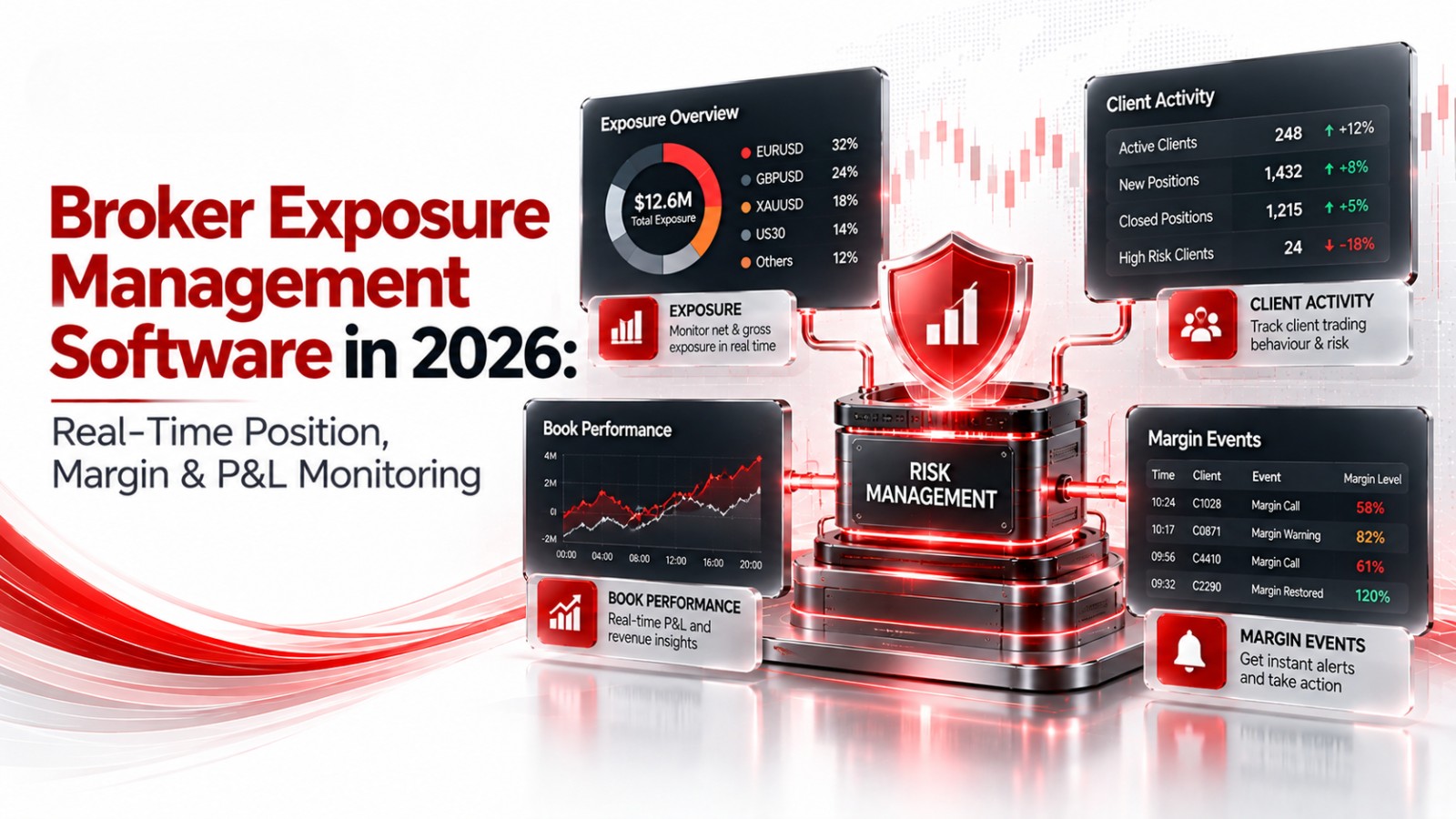
Instead of waiting for periodic reports, brokers can monitor metrics such as net exposure, gross exposure, margin utilisation, unrealised P&L, client concentrations, instrument exposure, and hedge requirements throughout the trading session.
The objective is not simply to display data. Modern systems help risk teams identify changes in exposure early, investigate the source of risk, and make informed decisions about hedging, limits, liquidity, and trading-book management.
Why Intraday Exposure Monitoring Matters for Forex Brokers
End-of-day exposure reports can be useful for reconciliation and historical analysis, but they cannot fully explain what is happening while markets are open.
Intraday monitoring becomes particularly important when volatility accelerates. A large client position can change a broker’s directional exposure rapidly, while multiple clients trading the same currency pair can create concentration that is not obvious from individual accounts.
The broader financial industry is also placing greater emphasis on intraday risk. The Bank of England’s 2026 assessment noted rising intraday exposures and the challenges created by high-volume, high-velocity trading activity.
For brokers, this makes continuous exposure monitoring a practical operational requirement rather than simply a reporting enhancement.
Net vs. Gross Exposure: What Risk Teams Need to Track
Net and gross exposure provide different views of trading risk.
- Gross exposure represents the total size of long and short positions before offsetting them. It helps risk teams understand the overall volume of positions being carried.
- Net exposure considers opposing positions and shows the remaining directional bias after offsetting longs and shorts.
For example, if clients collectively hold $20 million in long EUR/USD positions and $15 million in short positions, gross exposure is $35 million while net exposure is $5 million long.
Both figures matter. Net exposure helps identify directional risk, while gross exposure provides visibility into the scale and potential operational complexity of the book.
Real-Time Position Monitoring Across MT4 & MT5
For brokers using MetaTrader infrastructure, exposure monitoring needs to incorporate trading activity from MT4 and MT5 environments.
A real-time monitoring layer can consolidate open positions, order activity, volumes, symbols, account information, and pricing data into a central risk view.
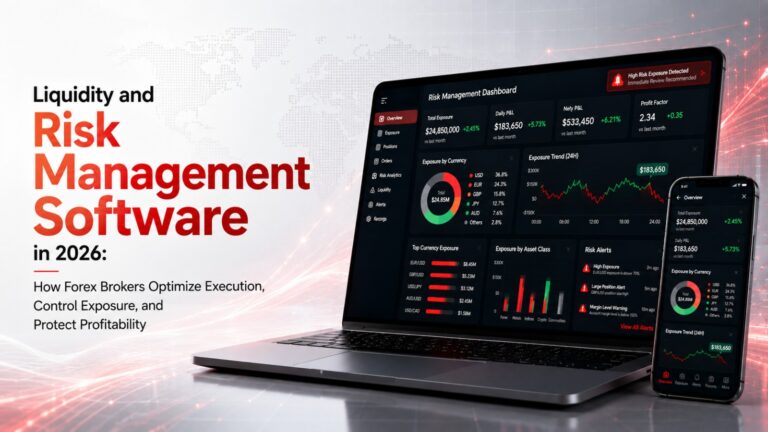
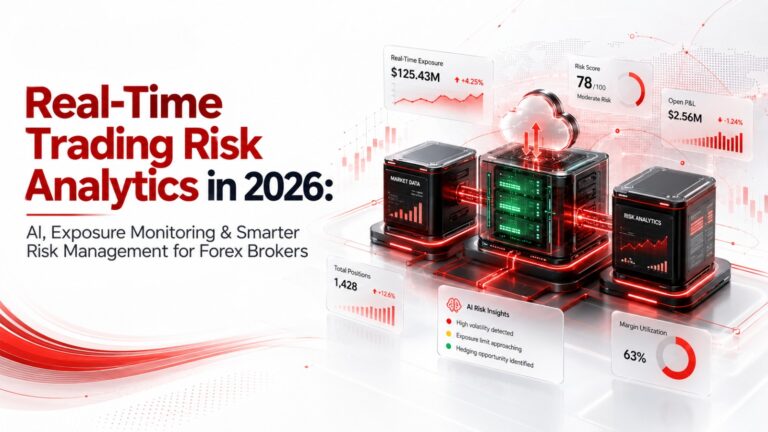
This is where Real Time Trading Risk Analytics becomes valuable. Instead of manually comparing platform reports, risk teams can see how positions change as trades are executed, closed, modified, or aggregated across accounts.
The result is faster identification of directional imbalances and concentrated positions.
Margin and Leverage Risk Monitoring
Leverage can amplify both trading opportunities and broker exposure. A client with relatively limited capital can control a substantially larger notional position, making margin monitoring essential.
Exposure software can track used margin, available margin, equity, margin ratios, leverage utilisation, and changes in collateral requirements.
Risk teams can then identify accounts approaching predefined thresholds and investigate whether concentrated positions or market movements are driving the change.
Margin visibility is particularly important during volatile markets, when rapidly changing prices can alter both unrealised P&L and margin requirements.
Client-Level vs. Aggregate Exposure
A broker needs both granular and consolidated views.
- Client-level monitoring helps identify individual accounts creating unusually large positions, high leverage, or significant unrealised losses.
- Aggregate monitoring combines positions across clients, symbols, currencies, regions, or trading books.
For example, several clients may independently build large long positions in the same currency pair. Each account could remain within its individual limit, while the combined exposure creates a much larger broker-level concentration.
An exposure management dashboard should make these relationships visible without requiring manual spreadsheet analysis.
P&L Monitoring and Exposure Concentration
P&L is closely connected to exposure. A large directional position can produce substantial gains or losses as market prices move.
Real-time P&L monitoring allows brokers to track realised and unrealised results while also identifying which clients, instruments, or books contribute most to the current P&L profile.
Combining P&L with exposure concentration provides additional context. A broker may have relatively modest net exposure but still carry significant gross positions across highly correlated instruments.
This is where Forex Risk Management Analytics can help transform raw trading data into actionable risk indicators.
Exposure Monitoring During High-Volatility Events
Economic announcements, geopolitical developments, central-bank decisions, and unexpected market events can rapidly change client behaviour.
During such periods, risk teams need to know not only how much exposure exists, but where it is concentrated and how quickly it is changing.
A modern system should therefore support real-time alerts for exposure thresholds, margin deterioration, large P&L movements, unusual position growth, and instrument concentration.
The importance of speed is reflected across the wider financial-market technology landscape. LSEG reported in 2026 that increasing data volumes and accelerating market velocity are reshaping market surveillance and risk workflows, with alert latency becoming increasingly important.
Liquidity and Hedging Decisions Based on Exposure Data
Exposure data can directly support dealing-desk and treasury decisions.
If aggregate client positions create a significant directional imbalance, a broker may need to evaluate whether external hedging is appropriate. Conversely, offsetting client positions may reduce the need for external hedging.
The key is having sufficiently current information. Delayed exposure data can result in hedging decisions based on positions that have already changed.
By connecting exposure, P&L, liquidity and position data, brokers can establish a more consistent view of the trading book.
Essential Metrics in a Broker Exposure Dashboard
A useful exposure dashboard should provide a concise view of the metrics that matter most to risk teams, including:
-
Net and gross exposure
-
Long versus short positioning
-
Open position volume
-
Margin utilisation
-
Available equity and free margin
-
Realised and unrealised P&L
-
Client-level exposure
-
Symbol and currency concentration
-
Largest individual positions
-
Exposure changes over time
-
Leverage utilisation
-
Hedging requirements
-
Risk-limit breaches and alerts
The dashboard should also allow users to move from an aggregate number into the underlying client, instrument, or position creating the exposure.
How Exposure Management Supports A-Book, B-Book and Hybrid Models
Exposure visibility is relevant regardless of execution model.
- In an A-Book environment, exposure monitoring can help identify positions that need external liquidity or hedging.
- In a B-Book model, it provides visibility into the broker’s internal market exposure created by client positions.
- For hybrid models, exposure monitoring becomes particularly important because positions may be allocated differently according to client characteristics, risk limits, profitability, or trading behaviour.
In each model, the underlying requirement remains the same: understand where the broker’s financial exposure exists and how it changes throughout the trading day.
What to Look for in Exposure Management Software
Brokers evaluating exposure management technology should consider more than dashboard appearance. Important capabilities include real-time data processing, MT4 and MT5 connectivity, configurable risk thresholds, client and aggregate views, margin monitoring, P&L analysis, alerts, historical analysis, and integration with existing trading infrastructure.
Scalability is equally important. LSEG’s 2026 market-surveillance analysis highlights the challenge of rising data volumes and the need for technology that can maintain performance as market activity increases.
The best architecture for a broker should therefore combine fast data processing with transparent calculations and practical workflows for risk and dealing teams.
Conclusion
Broker exposure management in 2026 is increasingly about continuous visibility rather than periodic reporting. Real-time position, margin and P&L monitoring helps brokers understand how client activity is changing their financial exposure throughout the trading session.
For firms evaluating Forex Broker Risk Management Solutions, exposure monitoring can provide the operational layer needed to connect trading activity with risk decisions. As market velocity, data volumes and intraday complexity continue to increase, brokers need exposure intelligence that is timely, consolidated and actionable.
Frequently Asked Questions
Q1. What is broker exposure management software?
It is software that monitors a broker’s trading exposure across positions, clients, instruments, margin, leverage and P&L, helping risk teams understand changes in exposure during the trading day.
Q2. Why is real-time exposure monitoring important?
Because client positions and market prices can change rapidly. Real-time monitoring gives risk teams visibility into emerging concentrations and directional exposure before relying on end-of-day reporting.
Q3. Can exposure software monitor MT4 and MT5 positions?
Yes. Exposure management solutions can integrate trading-platform data to consolidate positions, volumes, P&L and other risk information into a central monitoring environment.
Q4. What is the difference between net and gross exposure?
Gross exposure measures total long and short positions before offsetting. Net exposure reflects the remaining directional position after long and short positions are offset.
Q5. How does exposure monitoring support hedging?
By showing current directional and concentrated exposure, the system gives dealing and treasury teams data they can use when evaluating whether and where hedging may be required.