
The forex brokerage industry has become more competitive, data-driven, and technologically advanced than ever before. With increasing market volatility, algorithmic trading activity, tighter regulatory expectations, and rising client demands for better execution, brokers can no longer rely on manual processes to manage their liquidity and trading exposure.
Modern Liquidity and Risk Management Software has become a core part of a broker’s infrastructure. It enables brokers to aggregate liquidity from multiple providers, monitor real-time trading risks, automate hedging decisions, optimize A-Book and B-Book strategies, and maintain healthy profitability.
For brokers operating in 2026, success depends not only on acquiring clients and providing competitive spreads but also on having intelligent systems that can identify risk instantly, control toxic flow, reduce unnecessary exposure, and ensure reliable execution across all market conditions.
What is Liquidity and Risk Management Software?
Liquidity and Risk Management Software is an integrated technology solution designed to help forex brokers manage trade execution, liquidity connections, client exposure, and overall trading risk from a centralized environment.
The software connects brokers with multiple liquidity providers, aggregates pricing feeds, analyzes client trading behavior, and provides real-time visibility into open positions and potential market exposure.
Unlike traditional manual risk management methods, modern platforms use automated rules, advanced analytics, and intelligent execution strategies to help brokers make faster and more accurate decisions.
Core functions typically include:
- Liquidity aggregation and distribution
- Order routing and execution optimization
- Real-time exposure monitoring
- Automated hedging and risk controls
- Client segmentation and behavioral analysis
- A-Book, B-Book, and hybrid execution management
- Reporting, analytics, and compliance monitoring
These capabilities help brokers create a balanced ecosystem where execution quality, client experience, and profitability are managed simultaneously.
Why Forex Brokers Need Liquidity and Risk Management Software in 2026
The forex market has evolved significantly due to high-frequency trading, increased automation, and changing trader behavior. Brokers face several operational challenges, including sudden market movements, liquidity gaps, toxic trading strategies, and inconsistent execution quality.
A professional Forex liquidity management software solution allows brokers to access deeper liquidity pools, compare quotes from multiple providers, and route orders based on predefined execution logic. This reduces slippage and improves pricing stability for clients.
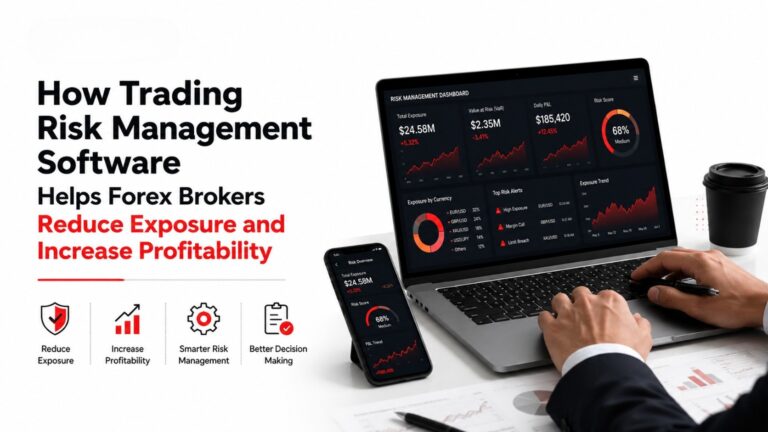
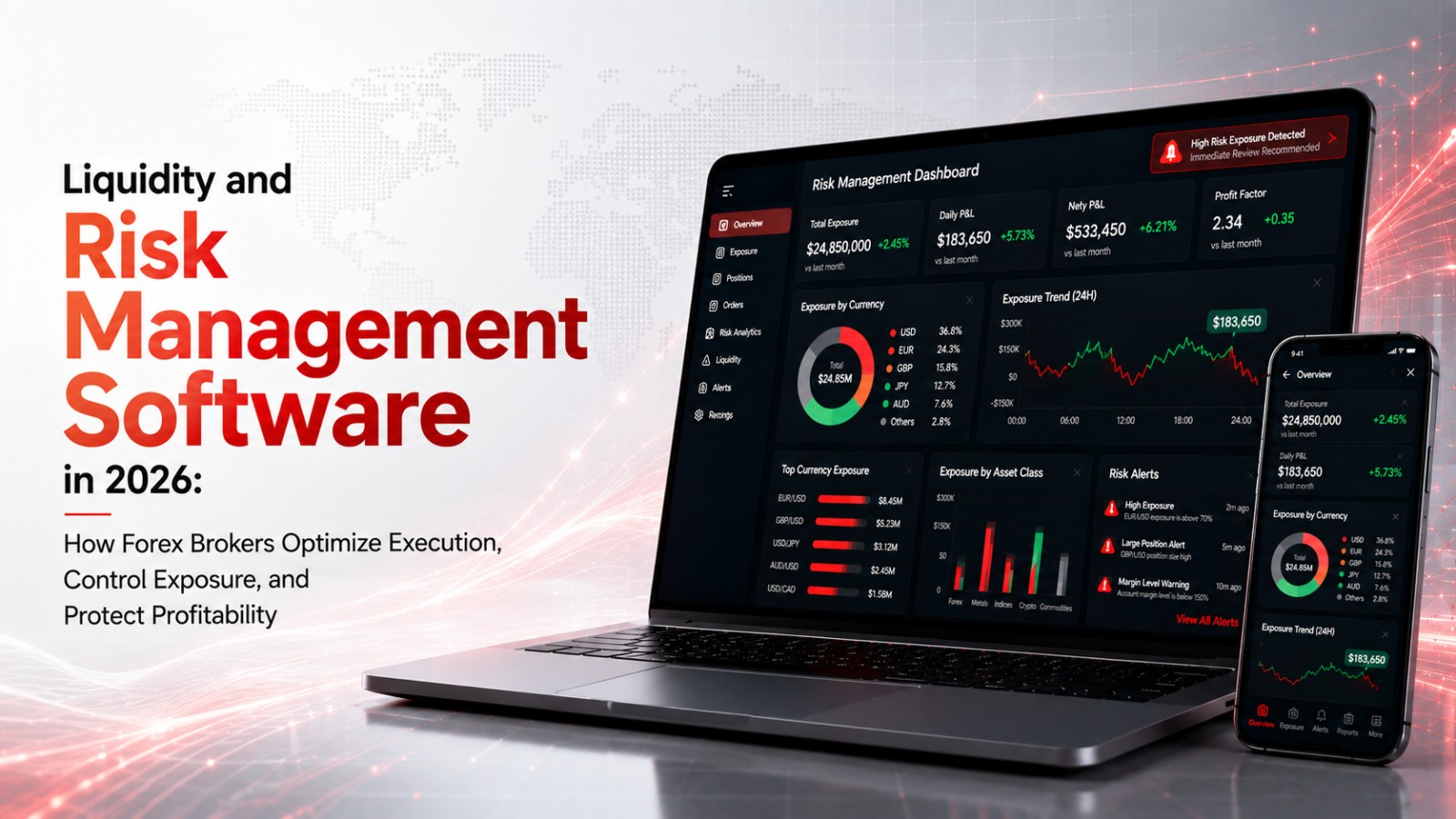
At the same time, Forex risk management software provides a clear view of the broker’s overall exposure. Instead of waiting for end-of-day reports, risk teams can identify dangerous positions in real time and take immediate action through hedging or adjusting internal risk parameters.
This combination of liquidity intelligence and risk automation helps brokers protect their revenue while delivering a better trading environment.
How Real-Time Forex Risk Monitoring Protects Brokerage Revenue
One of the biggest challenges for brokers is managing exposure during volatile market events. Economic announcements, geopolitical developments, and unexpected market shocks can create rapid price movements within seconds.
With advanced Real-time forex risk monitoring, brokers can track:
- Net exposure by currency pair
- Client concentration risk
- Profit and loss fluctuations
- Abnormal trading patterns
- Toxic flow and latency arbitrage activity
- Liquidity provider performance
For example, if a large number of clients take similar positions before a major economic announcement, the system can instantly alert the dealing desk or automatically hedge the exposure through connected liquidity providers.
This proactive approach prevents small risks from becoming significant financial losses.
Liquidity Management Solutions for Forex Brokers: Key Features to Consider
- Multi-Liquidity Provider Aggregation: Relying on a single liquidity provider creates unnecessary dependency and execution risk. Modern liquidity management solutions for forex brokers aggregate prices from banks, prime brokers, and non-bank liquidity providers to deliver competitive spreads and reliable market depth.
- Smart Order Routing: Smart routing algorithms analyze factors such as price, latency, available volume, and execution quality before sending orders to the most suitable liquidity source. This improves fill rates, minimizes slippage, and enhances the trading experience for clients.
- A-Book, B-Book, and Hybrid Risk Management: Successful brokers do not apply the same execution model to every client. Advanced risk systems classify traders based on their performance, strategy, and trading behavior. Low-risk flow may be internalized through B-Book models, while profitable or high-risk traders can be automatically routed to external liquidity providers using A-Book execution. A hybrid approach allows brokers to balance risk and maximize long-term profitability.
- Advanced Analytics and Reporting: Modern software provides detailed dashboards showing exposure levels, liquidity costs, client profitability, execution statistics, and historical performance. These insights allow management teams to make informed decisions based on real trading data rather than assumptions.
The Role of Automation and AI in Forex Risk Management Software
Artificial intelligence and machine learning are becoming increasingly valuable within forex brokerage technology. AI-driven risk engines can analyze millions of trading events, recognize unusual patterns, and recommend optimized execution strategies. These systems help brokers identify toxic flow, detect arbitrage strategies, and adjust risk parameters automatically.
Automation also reduces the dependency on manual monitoring, allowing risk teams to focus on strategic decision-making rather than routine operational tasks. However, human oversight remains essential. The most effective brokers combine automated technology with experienced risk managers who understand market behavior and can make strategic decisions during exceptional events.
Choosing the Right Liquidity and Risk Management Software Provider
Selecting the right technology partner has a direct impact on a broker’s operational efficiency and profitability.
When evaluating a solution, brokers should consider:
- Speed and stability of execution infrastructure
- Ability to connect with multiple liquidity providers
- Customizable risk management rules
- Real-time analytics and reporting capabilities
- Support for A-Book, B-Book, and hybrid models
- Scalability for increasing trading volumes
- Reliable technical support and ongoing system updates
A robust platform should adapt to the broker’s business model rather than forcing the broker to change its operational strategy.
Future Trends in Forex Liquidity and Risk Management
The next generation of brokerage infrastructure will focus on greater automation, deeper analytics, and faster decision-making.
Key trends shaping the industry include AI-powered exposure forecasting, predictive risk analysis, more sophisticated client segmentation, and intelligent liquidity routing based on historical execution performance.
As competition among brokers increases, technology will become one of the main factors separating profitable brokers from those struggling with inefficient execution and unmanaged exposure.
Conclusion
In 2026, effective Liquidity and Risk Management Software is no longer an optional technology layer for forex brokers; it is a fundamental requirement for sustainable growth. The ability to aggregate liquidity, optimize execution, monitor exposure in real time, and automate risk decisions directly influences profitability and client satisfaction.
Brokers investing in advanced Forex liquidity management software and Forex risk management software gain greater operational control, reduced exposure to market threats, and the flexibility to scale their business confidently.
For brokers looking to strengthen execution infrastructure and improve risk intelligence, partnering with an experienced liquidity and risk technology provider can create a significant competitive advantage.
Frequently Asked Questions
Q1. What is liquidity and risk management software in forex?
Liquidity and risk management software is a technology platform that helps forex brokers manage liquidity providers, execute orders efficiently, monitor trading exposure, automate hedging, and maintain profitability.
Q2. Why do forex brokers need liquidity management software?
It provides access to multiple liquidity sources, improves pricing, reduces slippage, and ensures stable trade execution during normal and volatile market conditions.
Q3. How does real-time forex risk monitoring work?
Real-time risk monitoring continuously analyzes open positions, client activity, market exposure, and profit-and-loss changes to help brokers identify and control risks immediately.
Q4. What is the difference between A-Book and B-Book execution?
A-Book routes client trades to external liquidity providers, while B-Book internalizes client trades within the brokerage. Many brokers use a hybrid model that combines both approaches.
Q5. Can liquidity and risk management software detect toxic trading?
Yes. Advanced systems can identify suspicious trading behaviors such as latency arbitrage, aggressive scalping patterns, and abnormal execution activity.
Q6. How does automation improve forex risk management?
Automation enables faster exposure analysis, instant alerts, automated hedging decisions, and consistent application of risk rules without relying solely on manual intervention.