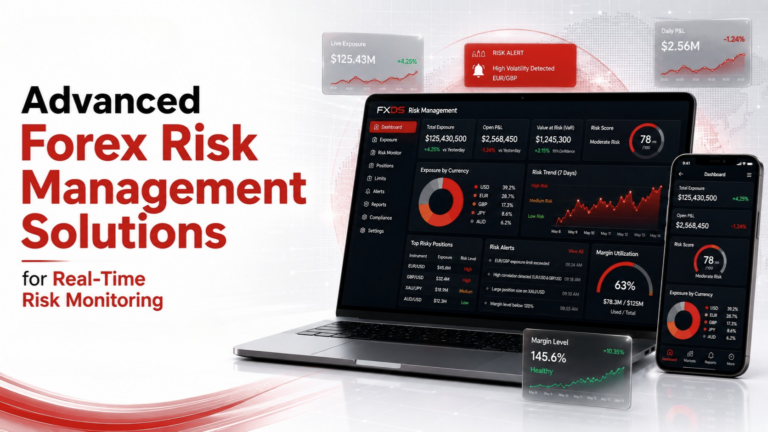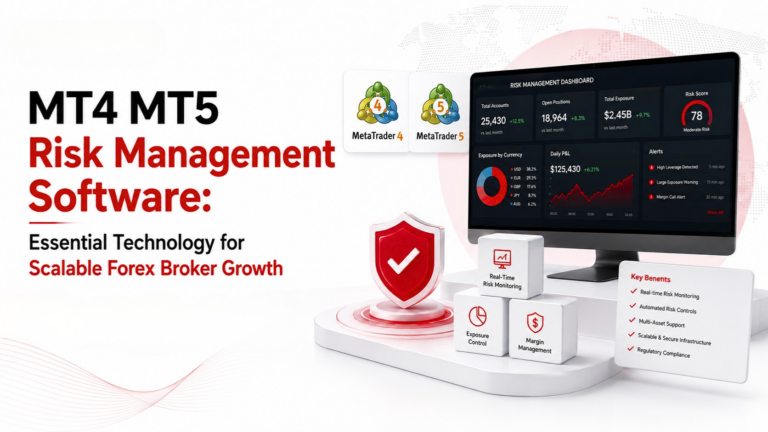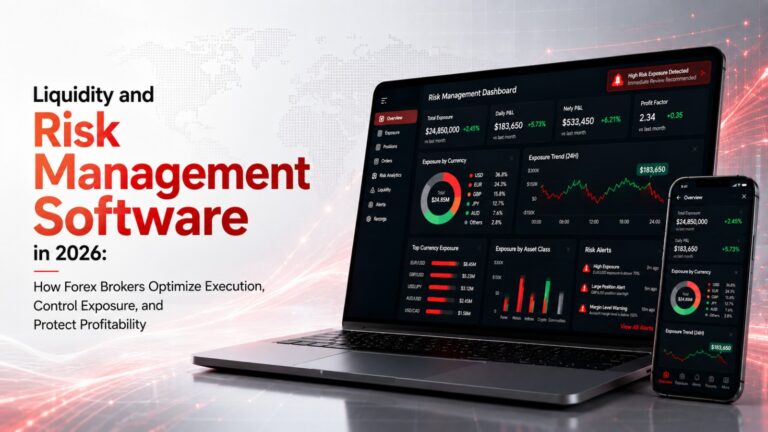
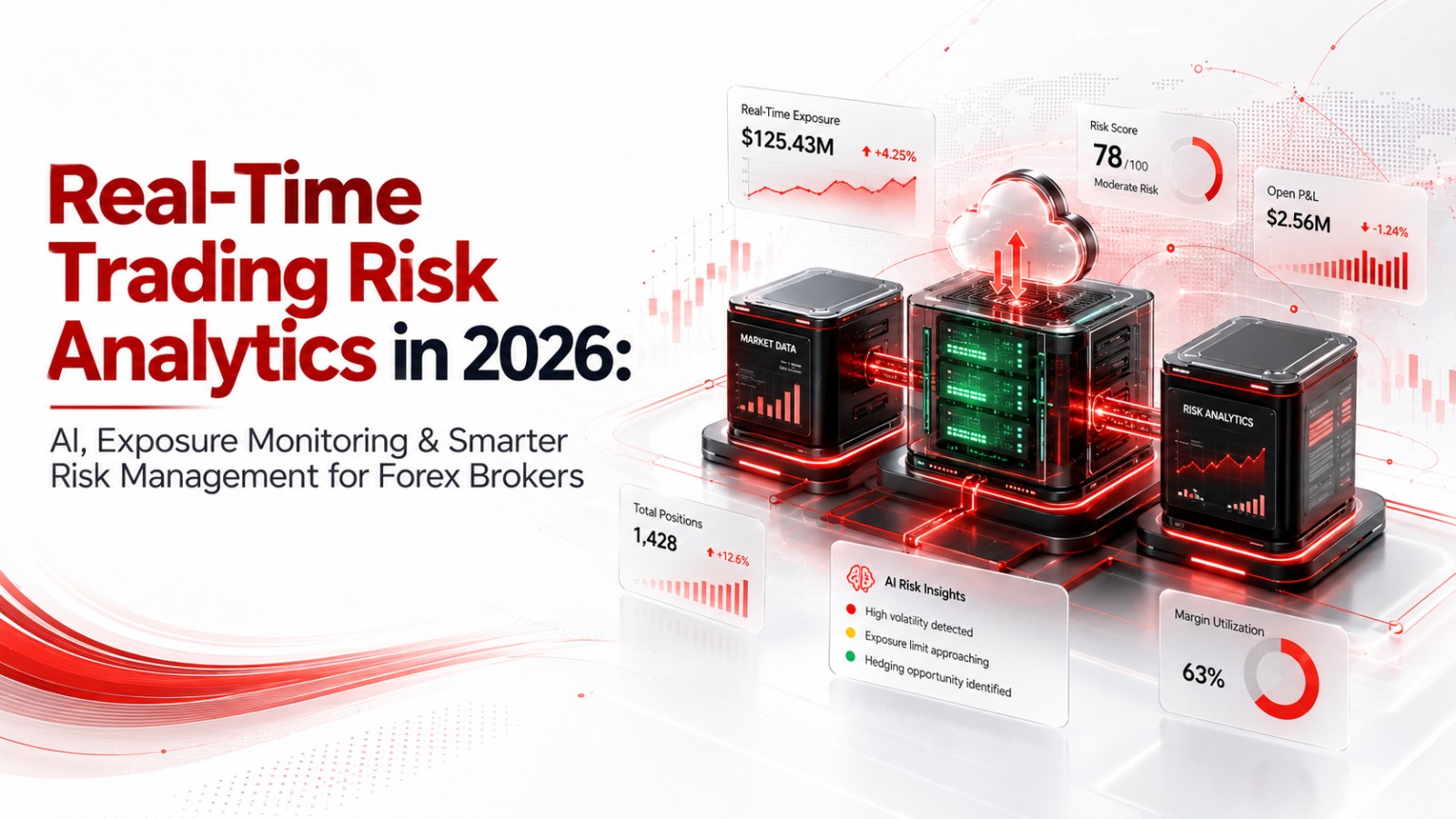
The forex market operates continuously across global sessions, creating opportunities for brokers and traders but also introducing complex risks. For forex brokers, monitoring exposure, client positions, liquidity, margin utilization, and trading activity in real time has become increasingly important.
In 2026, real-time trading risk analytics is evolving beyond dashboards that simply display current positions. Modern systems combine real-time data processing, automated alerts, exposure analysis, and artificial intelligence (AI) to help brokers identify potential risks earlier and respond more efficiently.
For brokers managing high trading volumes across multiple instruments and platforms, Forex Risk Management Analytics can provide a centralized view of trading exposure and risk conditions. When combined with automated monitoring and intelligent analysis, these capabilities can support more informed and responsive risk management.
What Is Real-Time Trading Risk Analytics?
Real-time trading risk analytics refers to technology that continuously analyzes trading activity and risk indicators as market and client positions change.
Instead of relying primarily on end-of-day reports, brokers can monitor information such as:
- Open positions and aggregate exposure
- Long and short exposure by currency pair
- Client-level and group-level risk
- Margin utilization
- Profit and loss
- Leverage exposure
- Concentration risk
- Trading volume and order activity
- Liquidity and execution conditions
- Dealer or dealing-desk activity
The objective is to provide risk teams with current information that can help them identify unusual exposure or potentially problematic trading conditions before they become larger operational or financial issues.
Why Forex Brokers Need Real-Time Exposure Monitoring
Forex exposure can change rapidly. A large number of clients may simultaneously build positions in the same currency pair, creating concentrated exposure for the broker.
For example, if a large proportion of clients hold positions in the same direction on EUR/USD, the broker may face increased exposure if market prices move against those positions. Monitoring aggregate exposure manually can become difficult as trading volumes increase.
A real-time monitoring system can consolidate positions across accounts, instruments, trading platforms, and liquidity venues. Risk teams can then examine the overall exposure rather than reviewing individual trades separately.
This is particularly useful for identifying:
- Excessive directional exposure
- Client concentration
- Rapid changes in open interest
- High-margin utilization
- Unusual trading patterns
- Large profitable or losing positions
- Exposure approaching predefined limits
Key Components of Forex Risk Management Analytics
Effective Forex Risk Management Analytics typically combines multiple data sources and analytical capabilities.
1. Real-Time Position Monitoring
The system continuously tracks open positions and updates exposure as trades are opened, modified, or closed. Risk teams can view exposure by client, account, currency pair, instrument, region, or other relevant dimensions.
2. Exposure Analysis
Exposure monitoring helps brokers understand how much risk is concentrated in particular instruments or directions. A useful analytics layer can display gross exposure, net exposure, long/short ratios, and changes over time. This allows risk teams to identify concentration before it reaches predefined thresholds.
3. Margin and Leverage Monitoring
Margin utilization is another important indicator. A sudden increase in leveraged positions can change a broker’s risk profile quickly. Real-time analytics can monitor margin levels and highlight accounts or groups approaching predefined risk limits.
4. Automated Alerts
Rather than requiring risk teams to constantly watch every metric, automated alerts can notify them when predefined conditions occur.
Examples include:
- Exposure exceeding a threshold
- Rapid position accumulation
- Unusual margin utilization
- Large P&L movements
- Concentrated client positions
- Significant changes in trading volume
Alerts can help teams prioritize situations that require attention.
How AI Is Changing Trading Risk Analytics in 2026
AI is becoming an important layer within modern Forex Broker Risk Management Solutions. Traditional risk systems generally rely on predefined rules. For example, a broker may configure an alert when exposure exceeds a specific limit. AI can complement these rules by identifying patterns across larger datasets.
Potential applications include:
Anomaly Detection
AI models can analyze historical trading behavior and identify activity that differs significantly from normal patterns. For example, unusual changes in trading frequency, position size, or instrument concentration could trigger additional investigation.
Risk Pattern Recognition
AI can identify relationships between multiple risk indicators. A sudden increase in leverage combined with growing directional exposure may represent a different risk scenario than either signal independently.
Predictive Risk Insights
Historical and real-time data can be used to estimate how certain exposure scenarios could affect the broker under different market conditions. These models should support—not replace—defined risk policies and human oversight.
Automated Risk Summaries
AI can also transform large volumes of trading data into concise summaries, helping risk managers quickly understand what has changed and which areas require attention.
Building a Forex Brokerage Risk Monitoring System
A modern Forex Brokerage Risk Monitoring System should connect data from the broker’s wider technology environment.
Depending on the architecture, this may include:
- MT4 and MT5 trading environments
- Trading platforms
- CRM systems
- Liquidity providers
- Risk engines
- Client databases
- Order management systems
- Market data feeds
- Financial and reporting systems
The system can consolidate these sources into a centralized risk layer.
APIs and automated data pipelines are particularly important because they allow risk information to move between systems without relying heavily on manual exports and spreadsheets.
From Dashboards to Actionable Risk Management
A dashboard is useful only when it helps teams make sense of changing conditions.
Modern risk analytics should therefore focus on actionable information rather than simply presenting large amounts of data.
For example, instead of showing hundreds of individual client positions, a risk dashboard could highlight:
EUR/USD Net Exposure → Above Defined Threshold
Margin Utilization → Rapidly Increasing
Client Concentration → Elevated
P&L Movement → Significant Change
This approach gives risk teams a clearer starting point for investigation.
Benefits of Real-Time Trading Risk Analytics
Implementing real-time analytics can provide several operational benefits for forex brokers.
- Faster Risk Identification: Continuous monitoring reduces dependence on periodic reporting and helps teams identify changes as they occur.
- Better Exposure Visibility: Aggregated exposure views make it easier to understand broker-wide risk across clients and instruments.
- Improved Operational Efficiency: Automated monitoring and alerts can reduce repetitive manual analysis and allow risk teams to focus on exceptions.
- More Consistent Risk Controls: Centralized rules and thresholds can help apply risk policies consistently across accounts and trading environments.
- Better Decision Support: Historical trends combined with real-time information can give risk managers greater context when evaluating changing market conditions.
What Should Brokers Look for in a 2026 Risk Analytics Platform?
When evaluating Forex Broker Risk Management Solutions, brokers should consider both current requirements and future scalability.
Important capabilities may include:
- Real-time exposure monitoring
- Multi-account and multi-instrument analytics
- MT4/MT5 connectivity
- Automated risk alerts
- Margin and leverage monitoring
- P&L analytics
- Client concentration analysis
- Historical risk reporting
- API-based integrations
- Role-based access controls
- Custom risk thresholds
- AI-assisted anomaly detection
- Scalable data processing
The right architecture will depend on the broker’s trading volume, platform environment, liquidity model, regulatory requirements, and internal risk policies.
The Future of Forex Risk Management
Real-time analytics is becoming an increasingly important part of modern forex brokerage infrastructure. As trading environments become more connected, brokers need risk systems that can process information quickly and present it in a usable format.
AI can add another analytical layer by helping identify patterns, anomalies, and emerging risk signals across large datasets. However, effective risk management still depends on clearly defined policies, reliable data, appropriate controls, and human oversight.
In 2026, the direction is increasingly toward connected, real-time, and intelligent risk management where exposure monitoring, analytics, automation, and AI work together rather than operating as isolated systems.
For forex brokers, investing in a scalable Forex Brokerage Risk Monitoring System can provide the infrastructure needed to understand exposure as it changes and support faster, more informed risk-management workflows.
FAQs
What is real-time trading risk analytics?
Real-time trading risk analytics is the continuous monitoring and analysis of trading positions, exposure, margin, P&L, leverage, and other risk indicators as market and client activity changes.
Why is real-time exposure monitoring important for forex brokers?
Forex positions can change rapidly, and concentrated exposure can develop across clients or currency pairs. Real-time monitoring helps brokers identify significant changes in exposure and potential risk conditions more quickly.
How does AI help with forex risk management?
AI can support anomaly detection, pattern recognition, risk analysis, and automated summaries. It can help identify unusual trading behavior or combinations of risk indicators that may require further investigation.
What are Forex Risk Management Analytics?
Forex Risk Management Analytics are tools and processes used to analyze trading exposure, client positions, margin, leverage, P&L, concentration, and other indicators to support brokerage risk management.
What is a Forex Brokerage Risk Monitoring System?
A Forex Brokerage Risk Monitoring System is a centralized technology layer that monitors trading activity and risk indicators across accounts, instruments, platforms, and other connected systems.
Can real-time risk analytics integrate with MT4 and MT5?
Yes. Risk analytics platforms can integrate with MT4 and MT5 environments through available APIs, server-side integrations, or other connectivity mechanisms, depending on the system architecture and implementation.