
An MT4 trading server does not become secure simply because deployment is complete. Once a forex brokerage goes live, its infrastructure becomes an ongoing security responsibility. Administrative accounts, remote access, operating-system components, configuration files, network services and monitoring systems all need continuous protection.
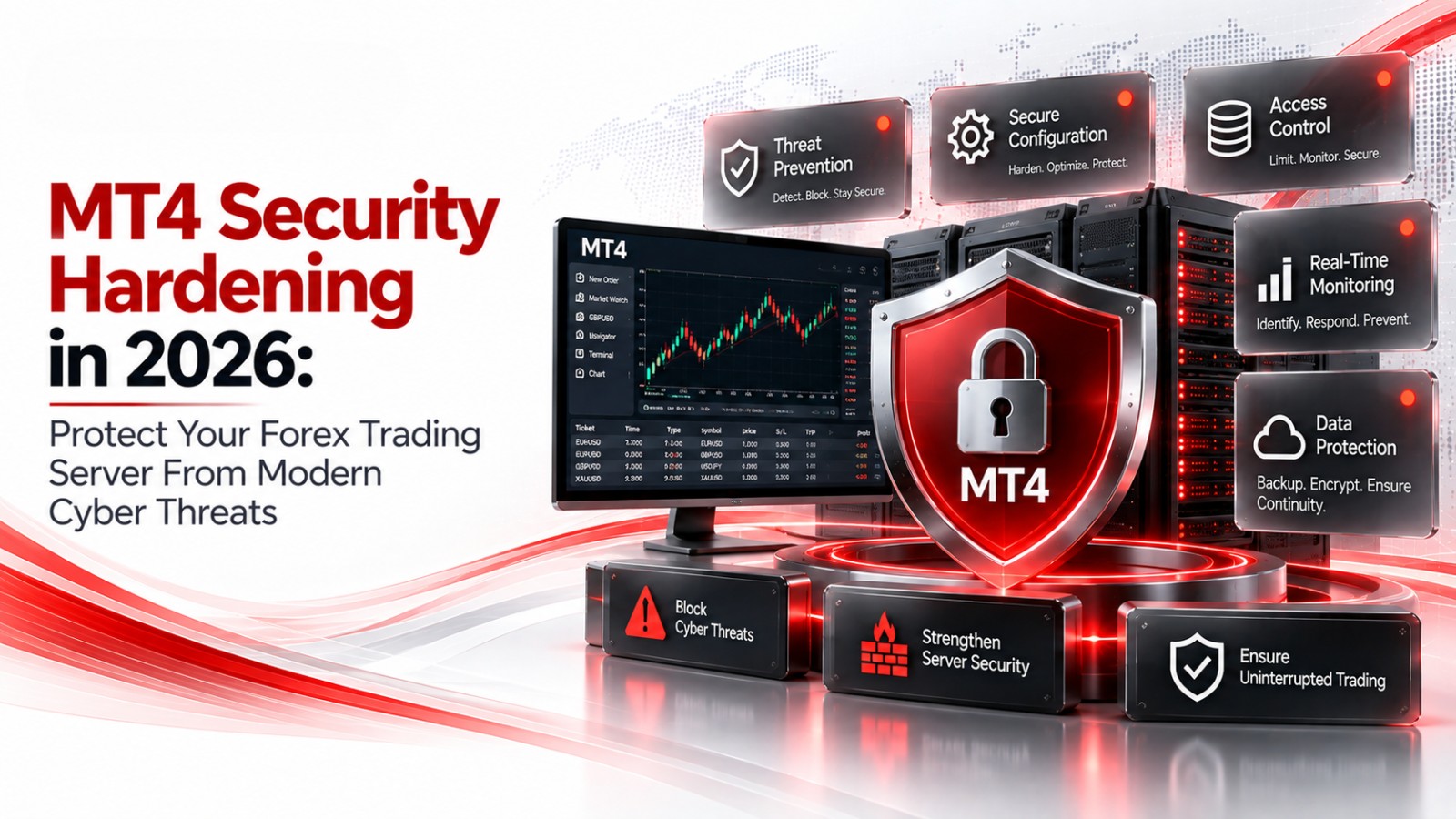
In 2026, effective MT4 security hardening is about reducing the attack surface, controlling privileged access, identifying suspicious activity and maintaining recovery capabilities if an incident occurs. Industry security guidance consistently emphasizes least privilege, strong authentication, timely security updates, monitoring and resilient backups as foundational controls.
This makes security hardening a distinct discipline from MT4/MT5 server setup and management. Setup establishes the environment; hardening protects that environment after deployment.
Why MT4 Server Security Matters for Forex Brokers in 2026
An MT4 environment is part of a larger brokerage ecosystem that can include liquidity bridges, databases, dealing tools, risk-management systems, client accounts and administrative interfaces. A compromised server or privileged account can therefore create operational and financial consequences beyond the affected machine.
Modern attacks increasingly target exposed services, weak credentials, unpatched systems and privileged access. CISA recommends practices such as MFA, timely patching, restricting internet exposure and monitoring network activity, while Microsoft emphasizes explicit verification, least privilege and segmentation for critical environments.
For forex brokers, security hardening should therefore be treated as an ongoing operational process rather than a one-time technical task.
What Is MT4 Security Hardening?
MT4 security hardening is the process of strengthening the trading-server environment after deployment to reduce vulnerabilities and unauthorized access.
It involves controlling who can access the server, limiting exposed services, protecting credentials and configuration files, applying security updates, monitoring system activity and preparing reliable recovery procedures.
The objective is not simply to make the server difficult to access. It is to ensure that legitimate administrators and trading services can operate normally while unnecessary access paths and opportunities for compromise are minimized.
Common Security Risks Facing MT4 Server Environments
Unauthorized Administrative Access
Privileged accounts can provide extensive control over server resources. If administrative access is exposed unnecessarily, attackers may attempt credential theft, brute-force attacks or exploitation of vulnerable remote-access services.
Weak Credentials and Exposed Accounts
Shared administrator passwords, reused credentials and inactive accounts increase the number of possible entry points. CISA recommends MFA for administrative and remote access and discourages shared administrator credentials.
Unpatched Server Components
Operating systems, supporting applications and infrastructure components can contain vulnerabilities. Delayed security updates leave known weaknesses available for exploitation. CISA specifically recommends prioritizing remediation of known exploited vulnerabilities and keeping operating systems and software updated.
Misconfigured Network Access
Unnecessary open ports, unrestricted remote administration and excessive inbound connectivity can expand the server’s attack surface.
Compromised Configuration Files
Configuration files may contain operational settings, connection information or other sensitive details. They should be protected through appropriate permissions, secure storage and controlled administrative access.
Malware and Intrusion Attempts
A compromised server can potentially be used for unauthorized processes, persistence, credential theft or lateral movement into connected infrastructure.
Poor Monitoring and Incident Detection
Without centralized logging, alerts and continuous monitoring, suspicious authentication attempts, resource anomalies or unexpected changes can remain unnoticed.
MT4 Security Hardening Practices Every Broker Should Implement
Restrict Server and Administrative Access
Apply least-privilege access so administrators receive only the permissions required for their responsibilities. Separate standard user activity from privileged administration and regularly review access rights. For remote administration, use controlled access paths such as VPNs or monitored jump hosts where appropriate. CISA recommends secure, monitored access for internet-accessible assets.
Strengthen Authentication and Credentials
Use unique, strong credentials for administrative accounts and eliminate unnecessary accounts. Enable MFA wherever supported, particularly for privileged and remote access. Access should also be reviewed when staff responsibilities change or personnel leave the organization.
Keep MT4 Components and Server Infrastructure Updated
Security hardening includes maintaining the underlying operating system and supported infrastructure components, not simply the trading application. Establish a patch-management process that tracks available updates, assesses their relevance and schedules controlled maintenance. Updates should be tested appropriately before production deployment to reduce operational risk.
Protect MT4 Configuration Files
Restrict permissions on configuration and sensitive system files. Avoid storing credentials in plaintext and ensure sensitive information is not unnecessarily exposed through scripts, logs or shared directories. Access to critical configuration should be limited to authorized administrators and reviewed periodically.
Secure Network Connections and Firewall Rules
Use firewall rules based on actual business requirements. Permit only necessary connections between the MT4 environment and trusted systems. Network segmentation can also help limit lateral movement if another component becomes compromised. Modern Zero Trust guidance emphasizes segmentation alongside least privilege and continuous verification.
Separate Trading Infrastructure From Unnecessary Services
An MT4 server should not become a general-purpose machine running unrelated applications and services. Removing unnecessary software, services and exposed interfaces reduces the attack surface and makes abnormal activity easier to identify.
Implement Continuous Server Monitoring
Security monitoring should cover authentication events, server resources, network activity, application behavior and unexpected configuration changes. Monitoring should generate actionable alerts rather than simply collecting large volumes of logs. This allows technical teams to investigate unusual behavior before it develops into a larger incident.
Maintain Backups and Disaster Recovery Procedures
Security incidents can involve data loss, system corruption or service disruption. Regular backups should therefore be protected from unauthorized modification and tested for actual recovery. CISA recommends maintaining recoverable backups as part of ransomware resilience, while modern backup guidance emphasizes access controls, monitoring and protection against malicious deletion.
Monitor Suspicious Login and Server Activity
Repeated failed logins, unexpected administrative sessions, unusual resource consumption and unexplained configuration changes should trigger investigation. Security teams should establish baseline behavior so that meaningful deviations can be identified quickly.
MT4 Security vs MT4 Server Performance
Security and performance should not be treated as competing objectives.
Poorly planned security controls can introduce unnecessary complexity, but properly implemented hardening can improve operational stability by removing unwanted services, controlling network traffic and identifying resource abnormalities.
The key is to implement security controls with an understanding of the MT4 environment. Firewall rules, access policies, monitoring agents, updates and maintenance activities should be evaluated for their potential effect on trading operations before production changes are introduced.
This is different from optimizing MT4 specifically for execution speed or latency. Security hardening focuses on protecting the infrastructure while preserving reliable platform operation.
How Server Monitoring Supports MT4 Security
Continuous monitoring creates visibility between scheduled security reviews.
For an MT4 environment, monitoring can cover server availability, CPU and memory utilization, disk activity, connectivity, execution-related performance indicators and unusual system behavior. Automated alerts can help technical teams investigate issues before they become major operational interruptions.
FXDS’s 24/5 MT4/MT5 Server Monitoring content covers this operational layer, including platform health, connectivity, server resources, execution performance and automated alerts. Security monitoring can complement these capabilities by adding greater visibility into authentication and infrastructure anomalies.
When Forex Brokers Should Consider Professional MT4 Server Management
Professional management can be useful when a brokerage lacks dedicated infrastructure specialists or needs continuous technical oversight across trading servers, connectivity and operational systems.
A professional provider can support patch management, access controls, monitoring, backup procedures, incident response and infrastructure maintenance while coordinating changes around active trading periods.
For brokers operating multiple servers, liquidity connections or complex dealing environments, centralized technical expertise can also help maintain consistent security practices across the infrastructure.
Security should remain integrated with the wider brokerage technology stack. Forex bridge technology manages connectivity between trading platforms and liquidity providers, while trading risk management software addresses exposure, client activity and trading risk. These functions are complementary rather than interchangeable.
MT4 Security Hardening Checklist for Forex Brokers
Before considering an MT4 environment hardened, brokers should verify:
- Administrative access is restricted to authorized personnel.
- MFA is enabled wherever supported.
- Shared and unnecessary accounts have been removed.
- Privileged permissions follow least-privilege principles.
- Operating systems and supported components receive timely security updates.
- Firewall rules allow only required connections.
- Unnecessary services and applications are disabled.
- Sensitive configuration files have restricted permissions.
- Credentials are not stored in plaintext.
- Server and authentication activity is continuously monitored.
- Security alerts have defined investigation procedures.
- Backups are protected against unauthorized access or deletion.
- Disaster recovery procedures are documented and tested.
- Security changes are reviewed for their effect on trading operations.
Frequently Asked Questions
Q1. What is MT4 security hardening?
MT4 security hardening is the ongoing process of protecting an MT4 server after deployment by restricting access, reducing the attack surface, protecting sensitive files, applying updates, monitoring activity and maintaining recovery capabilities.
Q2. How do you secure an MT4 server?
Start with privileged-access controls, strong authentication, timely patching, restrictive firewall rules, protected configuration files, minimal exposed services, continuous monitoring and tested backups.
Q3. How often should an MT4 server be updated?
Security updates should be assessed and applied according to the severity of the vulnerability, vendor guidance and the broker’s change-management process. Critical or actively exploited vulnerabilities should receive priority.
Q4. What are the biggest MT4 server security risks?
Common risks include compromised administrator credentials, unnecessary internet exposure, unpatched infrastructure, excessive permissions, insecure configuration files, malware and insufficient monitoring.
Q5. Can MT4 server security affect trading performance?
Yes. Poorly implemented controls can introduce operational overhead or connectivity issues. Security measures should therefore be tested and implemented carefully so protection does not disrupt legitimate trading services.
Q6. How does server monitoring improve MT4 security?
Monitoring provides visibility into authentication attempts, resource usage, connectivity and unusual system behavior, allowing technical teams to investigate potential problems earlier.
Q7. Should forex brokers outsource MT4 server management?
It depends on the brokerage’s internal expertise, infrastructure complexity and support requirements. Brokers without dedicated technical resources may use professional management to maintain monitoring, security, maintenance and operational continuity..